
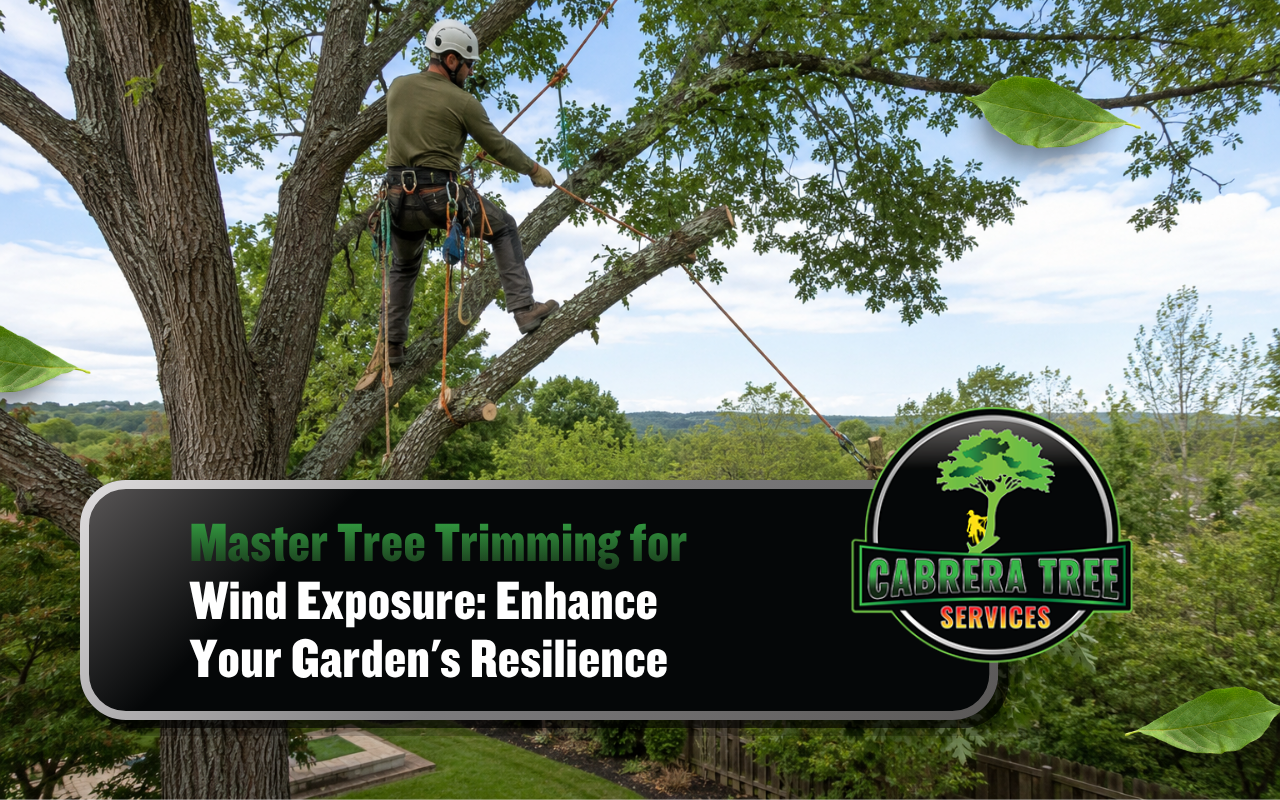
Strong winds can place heavy stress on trees, especially when canopies are dense, unbalanced, or filled with weak limbs. Tree trimming for wind exposure can improve airflow, reduce branch weight, and support a safer landscape around your Madison property.
At Cabrera Professional Tree Service LLC, we look at branch condition, canopy balance, and nearby structures before planning cuts. Our approach to tree trimming in Madison focuses on practical care that supports tree health and reduces avoidable wind damage.
Assess Wind Risks Around Your Trees
Every tree reacts differently to strong wind. Species, root condition, trunk strength, branch position, and soil stability can all affect how well a tree handles pressure. Young trees may bend more easily, while mature trees may carry large limbs that place extra strain on weak attachment points.
Start by checking the trunk for cracks, cavities, peeling bark, or unusual movement near the base. Look for exposed roots, leaning growth, and branches hanging over roofs, driveways, fences, or walkways. These signs can help you decide which trees need closer attention before windy weather arrives.
How Does Wind Affect Tree Structure?
Wind pushes against leaves and branches across the entire canopy. A thick crown can act like a sail, placing more force on the trunk and major limbs. When weight is uneven, one side of the tree may carry more pressure, increasing the chance of branch movement or failure.
Wind resistant trimming aims to create better balance without removing too much live growth. At Cabrera Professional Tree Service LLC, we consider how air moves through the crown and how each cut may affect the tree’s natural shape, strength, and future growth.
Shape Canopies for Safer Airflow
Canopy reduction for wind should focus on selected branches rather than heavy, random removal. The goal is to reduce excess weight and improve airflow while keeping enough healthy foliage to support the tree. Proper cuts can also reduce rubbing branches and crowded growth.
- Remove dead, broken, or hanging branches first.
- Thin selected crowded areas without stripping the canopy.
- Shorten overly long limbs back to suitable lateral branches.
- Keep the crown balanced on all sides of the tree.
- Avoid removing large amounts of live foliage at one time.
Our tree pruning service in Madison can address branch structure while protecting the tree’s natural form. Careful pruning is usually more helpful than aggressive topping, which can create weak new growth and an uneven crown.
Reduce Heavy Branch Loads Carefully
Branch load reduction can lower stress on long, heavy, or poorly positioned limbs. This method shortens selected branches while keeping healthy attachment points. It is often useful when limbs extend toward buildings, utility areas, parking spaces, or parts of the yard used by people.
- Identify limbs with cracks, decay, or weak unions.
- Check for branches carrying most of the canopy weight.
- Remove deadwood before shortening healthy limbs.
- Make clean cuts near suitable branch junctions.
- Review the tree’s balance after each major cut.
With Cabrera Professional Tree Service LLC, you receive a careful assessment before branch load reduction begins. This helps avoid unnecessary cuts and supports a more even canopy that can move more naturally when wind passes through it.
Choose Safe Timing and Trimming Methods
Timing depends on the tree species, current condition, and the reason for trimming. Dormant-season pruning may make branch structure easier to see, while damaged or hanging limbs may need attention sooner. Trimming for storm airflow in Madison should be planned before severe weather whenever possible.
Sharp tools create cleaner cuts and reduce unnecessary damage to bark and wood. Small branches may be manageable from the ground, but large limbs, tall trees, and branches near structures require greater care. Tree trimming for wind exposure should never place a person beneath unstable branches or in an unsafe climbing position.
Professional Support for High-Risk Trees
Some trimming tasks are not suitable for a do-it-yourself approach. Large trees can carry heavy limbs that shift during cutting. Hidden decay, split unions, and branches under tension can also make the work unpredictable. Professional support is especially important when trees stand close to homes, roads, fences, or utility lines.
- The tree has large dead or broken limbs.
- The trunk shows cracks, cavities, or visible decay.
- Branches extend over a roof or occupied area.
- The tree leans more after wind or heavy rain.
- Safe trimming requires climbing or specialized equipment.
Our team at Cabrera Professional Tree Service LLC can review these conditions and recommend a practical trimming plan. You can request an assessment for your trees when wind exposure creates concerns around your property.
Frequently Asked Questions
Can trimming make a tree completely windproof?
No trimming method can make a tree completely safe from wind. However, tree trimming for wind exposure can reduce weak growth, improve balance, and lower excess branch weight. A professional assessment can help identify the most important areas to address.
What is wind resistant trimming?
Wind resistant trimming is selective pruning that improves canopy balance and airflow. It may include deadwood removal, crown thinning, and shortening long limbs. Our Madison tree trimming service focuses on cuts that support structure without removing excessive foliage.
Is canopy reduction the same as tree topping?
No. Canopy reduction for wind uses careful cuts back to suitable lateral branches. Topping removes large sections without respecting natural branch structure. For better results, review our professional tree pruning options.
How often should trees be checked for wind damage?
Trees should be inspected regularly and after strong wind, heavy rain, or visible branch movement. The right schedule depends on species, age, growth rate, and location. Trees near buildings or walkways may need more frequent checks.
When should I call a tree service?
Call when you notice cracked limbs, hanging branches, trunk damage, sudden leaning, or heavy growth near structures. At Cabrera Professional Tree Service LLC, we can help evaluate the situation. Use our contact page to discuss your tree concerns.
Build a More Wind-Ready Landscape
A stronger landscape begins with regular inspections, balanced pruning, and careful attention to branch weight. Tree trimming for wind exposure can help trees move more naturally during gusts while reducing pressure on weak or crowded areas. The best plan protects both tree health and the spaces around it.
When you choose Cabrera Professional Tree Service LLC, we evaluate your trees based on their condition, location, and exposure to wind. Schedule a tree assessment in Madison to plan practical trimming before damaged or overloaded branches become a larger concern.