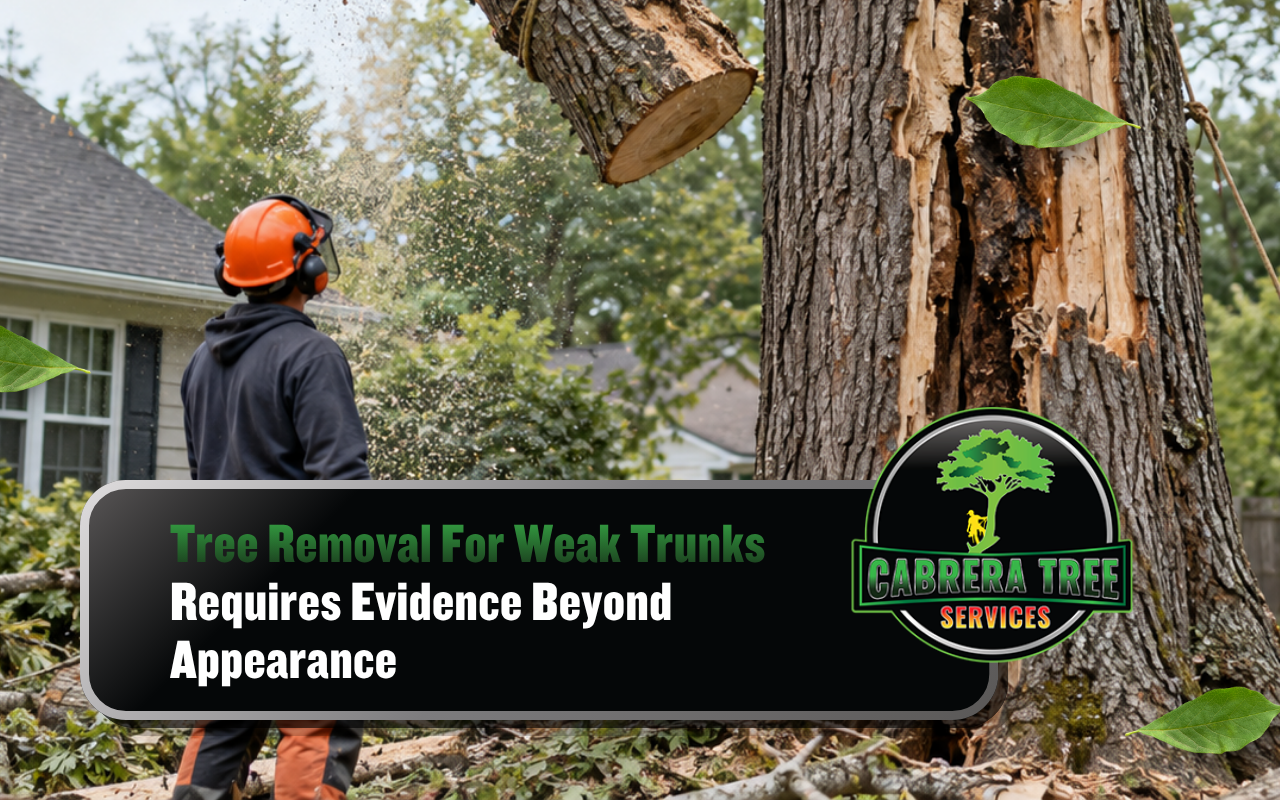
A trunk can look solid from one side while decay, cracks, cavities, or root problems reduce strength elsewhere. Planning tree removal for weak trunks should rely on visible defects, movement, canopy load, and what could be hit if failure occurs. explore our tree services or request your removal estimate when a trunk shows cracking, hollow areas, lean, or repeated storm damage.
Weak Trunk Tree Removal Starts With Failure Indicators
Large cavities, expanding cracks, severe decay, bark separation, and root movement can all suggest reduced trunk strength. One defect alone does not always require removal, but combinations can raise concern quickly.
Cracked Trunk Service In Scottsboro Should Track Movement
A crack that widens during wind or after rain deserves more attention than an old stable scar. Movement can show that the trunk is still changing under load.
For local removal information, visit our explore Scottsboro removal services page.
Unstable Trunk Removal Should Consider What Lies Below
review our tree services or schedule your removal estimate when a weak trunk stands near a house, road, parking area, or other target. Risk changes dramatically when people or structures occupy the possible fall zone.
Licensed service matters when unstable trees require controlled removal near property.
Diagnostic Tip Compare Trunk Defects With Canopy Load
A hollow trunk supporting a small balanced canopy may behave differently from the same defect beneath several heavy, extended limbs. Trunk condition should be evaluated together with the weight and leverage above it.
These Trunk Conditions Deserve Faster Professional Evaluation Now
- Fresh vertical cracks
- Large cavities with soft wood
- Root plate movement
- Sudden increase in lean
Removal Decisions Should Separate Weakness From Cosmetic Scars
Old pruning wounds and bark scars can look dramatic without necessarily indicating active failure. The key question is whether the defect affects structural wood, changes under load, or combines with other weaknesses.
Use This Decision Sequence Before Removing A Weak Tree
- Identify active trunk defects
- Check root stability
- Review canopy leverage
- Identify targets below
- Compare pruning versus removal
General Tree Services Can Support Broader Risk Reduction
Some trees need removal, while neighboring trees may only need trimming or monitoring. For broader options, visit our explore complete tree services page.
Emergency Tree Services Matter When Trunk Movement Increases
If a cracked or leaning trunk begins moving after a storm, people should stay out of the fall zone. 24/7 emergency tree services are available when trunk instability becomes an immediate concern.
Residential And Commercial Weak Trees Create Different Risks
Residential properties may involve homes and yards, while commercial sites may add parking, entrances, customers, and service areas. Our residential and commercial experience helps account for those different targets.
Experience Helps Separate Monitorable Defects From Removal Candidates
Our team at Cabrera Professional Tree Service LLC evaluates trunk condition in context instead of recommending removal based only on appearance.
Root Problems Can Make A Sound-Looking Trunk Less Stable
Trunk inspection should not stop at eye level. Soil lifting, exposed roots, fungal growth near the base, or recent excavation can indicate reduced support even when the trunk surface looks mostly intact.
Root condition matters because a structurally sound trunk can still fail if the tree is no longer anchored adequately.
Canopy Changes Can Reveal Decline Before Trunk Failure
Progressive dieback, unusually small leaves, or a thinning crown can sometimes appear alongside trunk decay or root stress. These symptoms do not prove structural failure, but they provide additional context when evaluating the whole tree.
A risk decision should combine visible structural defects with overall tree condition rather than relying on one dramatic symptom.
Removal Planning Should Protect The Area Around Weak Trees
A compromised trunk may limit climbing, rigging, or how much force can safely be applied during dismantling. Nearby structures and ground access therefore become part of the removal strategy from the beginning.
At Cabrera Professional Tree Service LLC, we consider the defect and the work method together so the removal process does not rely on strength the tree may no longer have.
Monitoring Only Works When The Defect Is Trackable
Some defects can be photographed and compared over time, while others involve active movement or high-value targets that make waiting less appropriate. If monitoring is chosen, homeowners should know what changes would trigger a faster response.
Tree History Can Explain Why A Trunk Became Weak
Old storm damage, previous topping, construction injury, root cutting, lightning, or repeated mower impacts can all contribute to structural decline over time. Knowing that history helps explain whether a visible defect is recent or part of a longer pattern.
That context does not replace current inspection, but it can help connect trunk weakness with earlier events and support a more informed removal or monitoring decision.
Weather Conditions Can Quickly Change Tree Removal Urgency
A weak trunk that seems stable during calm weather may become more concerning before strong wind or saturated soil conditions. Upcoming weather can therefore influence how quickly a questionable tree should be evaluated.
Frequently Ask Questions
Does a hollow trunk always require removal?
No. The amount, location, and structural effect of decay must be considered with canopy and root condition.
Can cracks get worse after storms?
Yes. Wind and canopy movement can extend or widen existing cracks.
Should leaning trees always be removed?
No. Lean origin, root movement, trunk condition, and targets below all matter.
Can pruning reduce trunk load?
Sometimes selective reduction may lower leverage, but it is not appropriate for every weak trunk.
When is emergency service appropriate?
When trunk movement, cracking, or lean creates an immediate threat to people, structures, or access.
Remove Weak Trees Based On Structural Evidence First
Good tree removal for weak trunks decisions consider cracks, decay, root stability, canopy leverage, and surrounding targets together. explore our tree services or book your removal estimate with Cabrera Professional Tree Service LLC when a questionable trunk needs a clear risk-based plan.