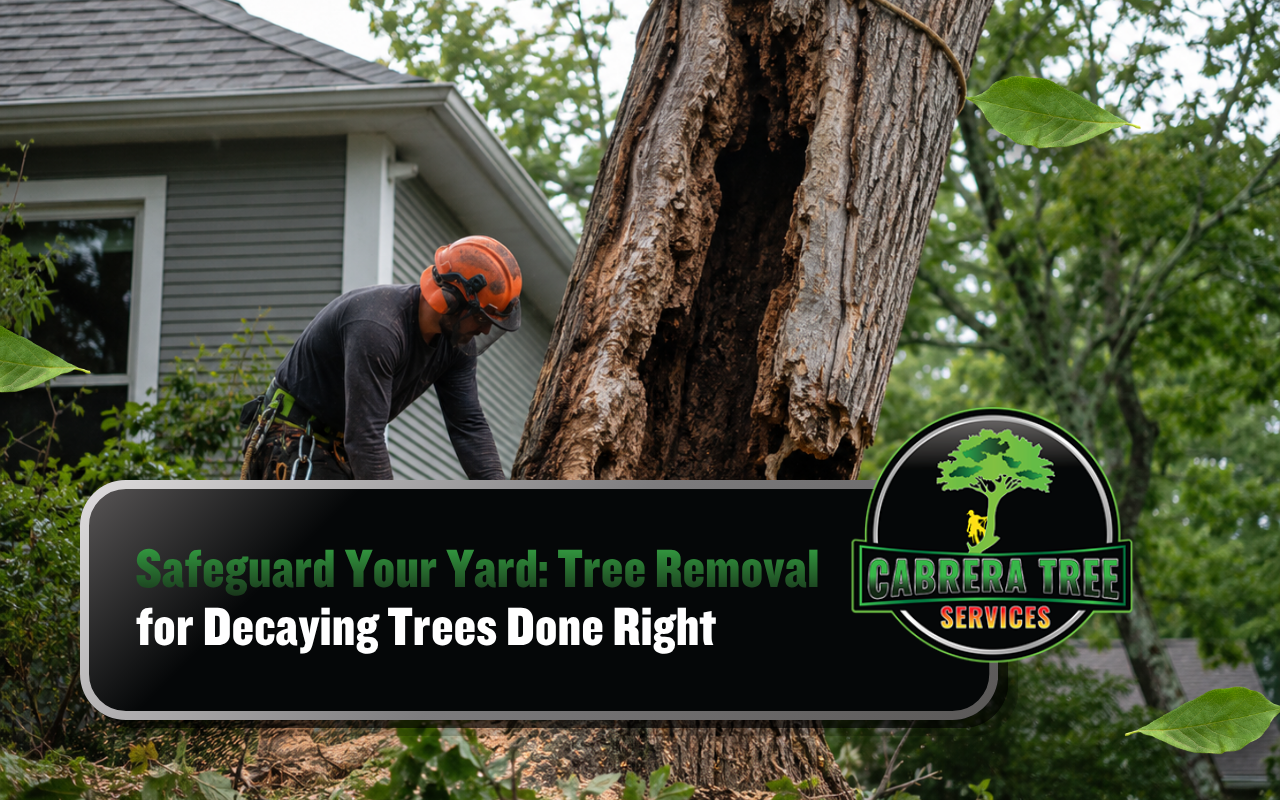
A weakening tree can change from a yard concern into a serious hazard. Sparse leaves, damaged bark, soft wood, and falling limbs may signal that the tree needs attention.
At Cabrera Professional Tree Service LLC, we approach tree removal services in Scottsboro with careful planning and respect for the surrounding property.
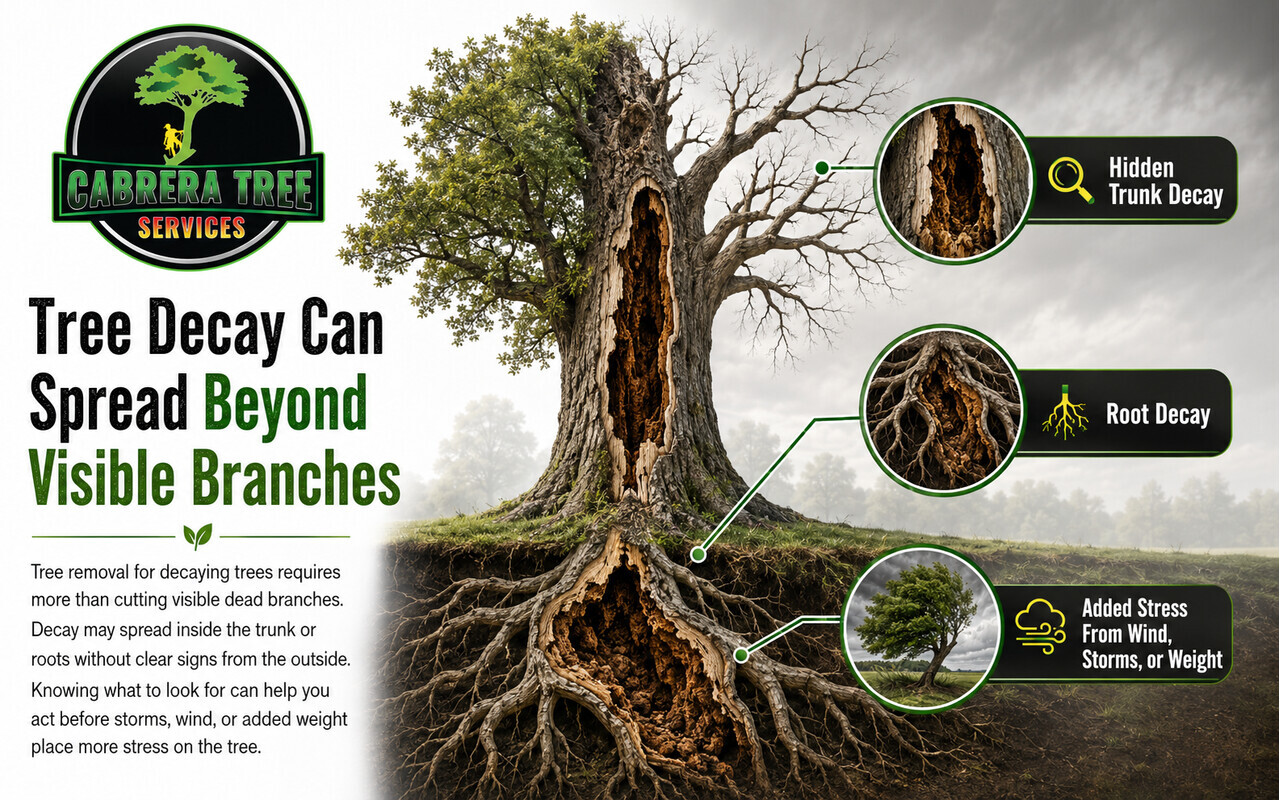
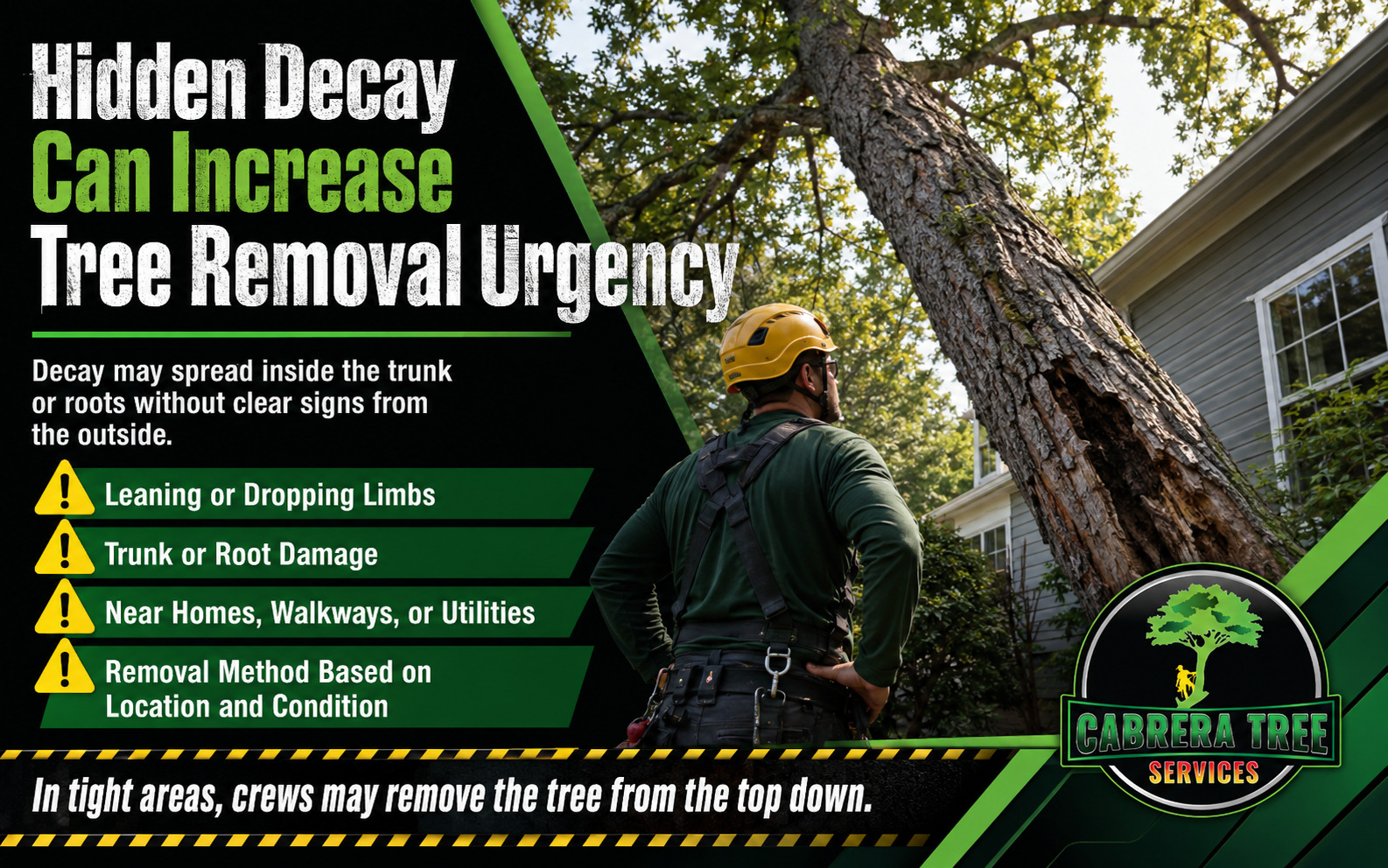
Tree removal for decaying trees requires more than cutting visible dead branches. Decay may spread inside the trunk or roots without clear signs from the outside. Knowing what to look for can help you act before storms, wind, or added weight place more stress on the tree.
Recognize Early Signs That a Tree Is Decaying
Tree decay often begins with small changes that are easy to overlook. The bark may loosen, crack, or develop sunken areas.
Leaves can become thin or change color outside their normal season. Fungi near the trunk may also suggest that moisture and decay are affecting the wood.
Common Decay Warning Signs
- Hollow areas, deep cavities, or soft sections in the trunk
- Mushrooms or fungal growth around the trunk or roots
- Large dead branches in the upper canopy
- Cracks where major limbs connect to the trunk
- Exposed, damaged, or lifting roots near the soil
These signs do not always reveal how far the damage has spread. Internal decay tree removal may become necessary when the wood can no longer support the trunk or heavy branches.
A professional evaluation can help identify risks that are not visible from ground level.
Know When a Decaying Tree Becomes Unsafe
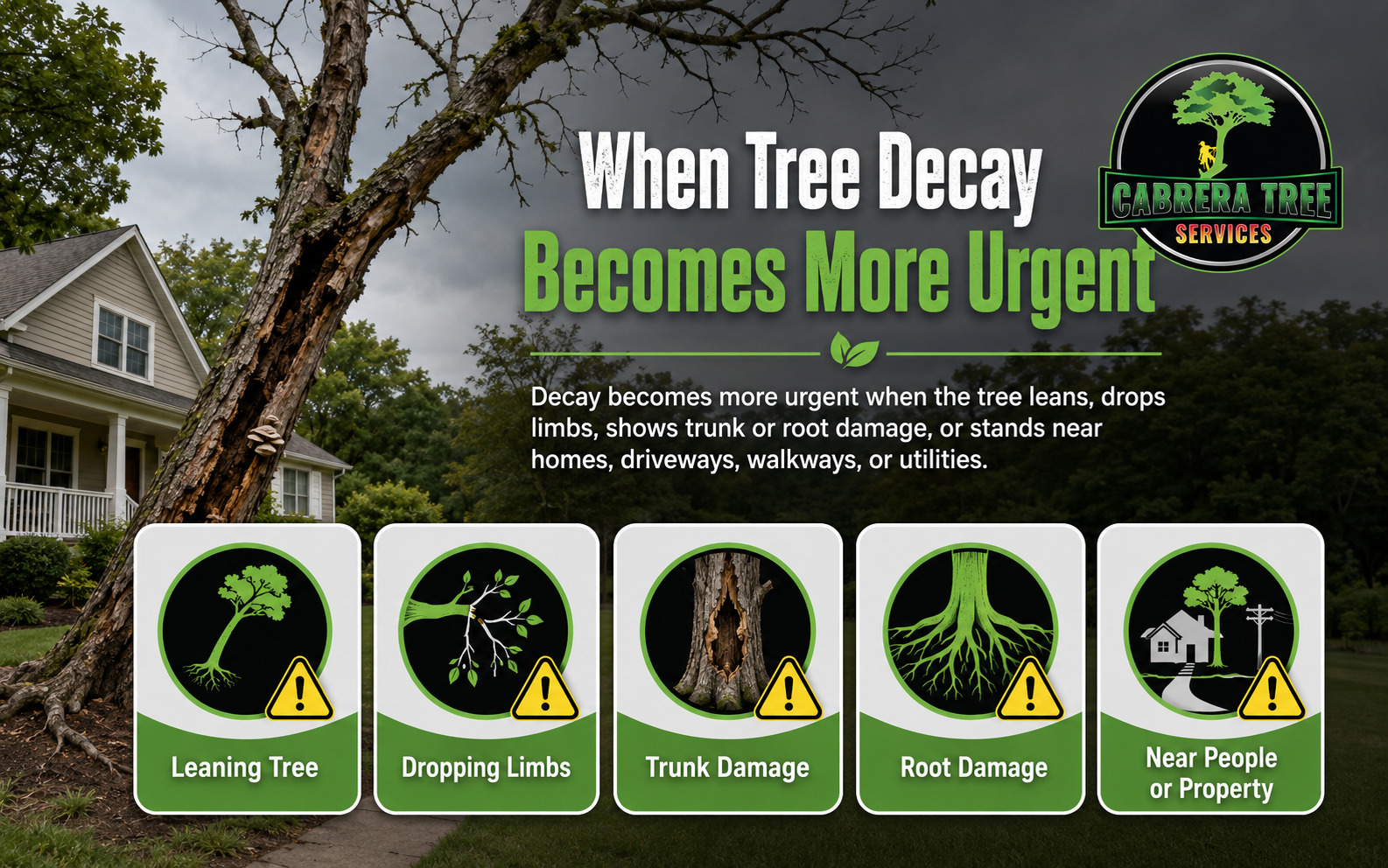
A decaying tree becomes more concerning when it stands near a home, driveway, walkway, fence, or utility area. Its condition may also be urgent when the trunk leans, the roots shift, or large limbs begin dropping.
An unstable decayed tree may react poorly to strong wind or saturated soil. The direction of the lean and the condition of nearby targets should guide the next step.
A tree with minor damage in an open area may not carry the same risk as one beside a busy part of the property. Tree removal for decaying trees should be considered promptly when structural weakness threatens people or buildings.
Key Takeaway
Decay becomes more urgent when the tree leans, drops limbs, shows trunk or root damage, or stands near homes, driveways, walkways, or utilities.
Compare Decay Signs and Next Steps
Different decay signs point to different levels of risk. A clear comparison can help property owners decide when to keep watch, request inspection, or plan removal.
Decaying Tree Safety Guide
| Decay Sign | Why It Matters | Helpful Next Step |
|---|---|---|
| Soft or hollow trunk sections | The tree may have less solid wood supporting its weight. | Request an assessment before storms or high winds arrive. |
| Fungal growth near roots | Decay may be affecting the base or root system. | Check whether root stability has been reduced. |
| Large dead limbs | Dead branches can fall and may suggest broader decline. | Keep the area clear and review removal options. |
| Growing lean | The trunk or roots may be losing support. | Schedule an inspection as soon as possible. |
| Cracks at major branch unions | Large limbs may split away from the trunk. | Consider professional cutting or full removal when risk is high. |
Understand How Hidden Decay Weakens Structure
Some trees remain green even while decay spreads through the center of the trunk. This hidden damage can reduce the amount of solid wood supporting the canopy.
Our team considers the tree’s shape, visible defects, surrounding space, and likely drop zone before recommending a removal approach.
Roots can also decay below the soil, making the tree less stable without obvious warning. Soil movement, exposed roots, or a growing lean may point to a weakened base.
Our broader professional tree care services can help address related concerns around the yard.
Key Takeaway
A tree can look partly healthy while hidden decay weakens the trunk or roots. Green leaves do not always mean the structure is safe.
Plan Safely Before Removal Work Begins
Before crews remove decaying tree material, they need a clear work area and a controlled plan. Rotten sections may split or fall differently from healthy wood.
Nearby structures, landscaping, access points, and overhead obstacles must be considered before cutting begins.
Removal Planning Steps
- Review the tree’s lean, trunk damage, and branch weight.
- Identify nearby buildings, fences, vehicles, and walkways.
- Set a safe work zone around the removal area.
- Choose equipment that matches the tree’s size and condition.
- Plan how limbs, trunk sections, and debris will be managed.
Property owners should avoid trying to remove decaying tree sections that are large, elevated, or close to structures. Weak wood can move without warning.
Scheduling professional decaying tree removal in Scottsboro reduces the need to work around unstable limbs and damaged trunks.
Know What Happens During Professional Removal
The removal method depends on the tree’s location and condition. In a tight area, crews may remove branches and trunk sections from the top down.
In a clear area, another controlled method may be suitable. With Cabrera Professional Tree Service LLC, the process is planned around the available space and visible tree weakness.
Professional Removal Process
- Establishing a controlled work area around the tree
- Removing weak or obstructing branches in planned sections
- Lowering heavy pieces when free falling is not suitable
- Cutting the remaining trunk into manageable sections
- Collecting branches and wood from the work zone
A rotting tree service must remain flexible because damaged wood may not respond like healthy wood. The crew may adjust the cutting order as weak areas become visible.
This careful process supports better control and helps limit avoidable effects on nearby parts of the property.
Key Takeaway
Decayed trees need controlled planning because weak wood can split, shift, or fall differently from healthy wood during removal.
Manage Wood and Debris After Removal
After a tree is removed, branches, trunk sections, leaves, and wood chips need proper handling. Some material may be chipped or prepared for green waste, depending on the condition of the wood and the needs of the property.
Removing loose debris also makes the cleared area easier to inspect. Nearby trees should be watched after the work is complete.
Changes in sunlight, wind exposure, and soil moisture can affect their growth. Mulch may help retain moisture when it is placed around the root area without touching the trunk.
Regular observation can reveal new stress, bark changes, or damaged branches.
Frequently Asked Questions
Can a decaying tree recover without being removed?
The answer depends on the amount and location of the decay. Limited damage may allow other care options, while severe trunk or root decay can reduce structural support. Our tree care service options can help property owners understand which next step fits the visible condition.
How quickly should I remove a decaying tree?
A tree near a house, driveway, walkway, or gathering area may need prompt attention when it has a strong lean, falling limbs, root movement, or major trunk damage. Tree removal for decaying trees should not be delayed when the tree’s condition creates a clear risk to people or property.
Can I remove decaying tree branches myself?
Small ground-level debris may be manageable, but elevated branches and weakened trunks can move in unexpected ways. It is safer to avoid climbing, chainsaw work, or cutting near structures. You can request a tree removal assessment when the safe approach is unclear.
What causes internal decay in a tree?
Internal decay may begin after damage allows moisture, fungi, or other harmful organisms to enter the wood. Broken branches, trunk wounds, root damage, and long-term stress may contribute to the problem. The outside of the tree may not show the full extent of the weakened area.
Do you handle unstable decayed trees in Scottsboro?
At Cabrera Professional Tree Service LLC, we assess the tree’s visible condition, location, and surrounding obstacles before planning the work. Property owners can review our Scottsboro tree removal service for more information about removing weakened or damaged trees.
Plan a Safer Yard in Scottsboro
Waiting too long to remove decaying tree material can allow structural problems to become more difficult to manage. Early action gives you more time to protect nearby buildings, outdoor areas, and healthy trees.
It also allows the removal plan to reflect the tree’s condition before further decline occurs. When you choose Cabrera Professional Tree Service LLC, we plan the work around your property and the condition of the tree.
Use our contact page to discuss a decaying tree and take the next step toward a safer Scottsboro yard.