
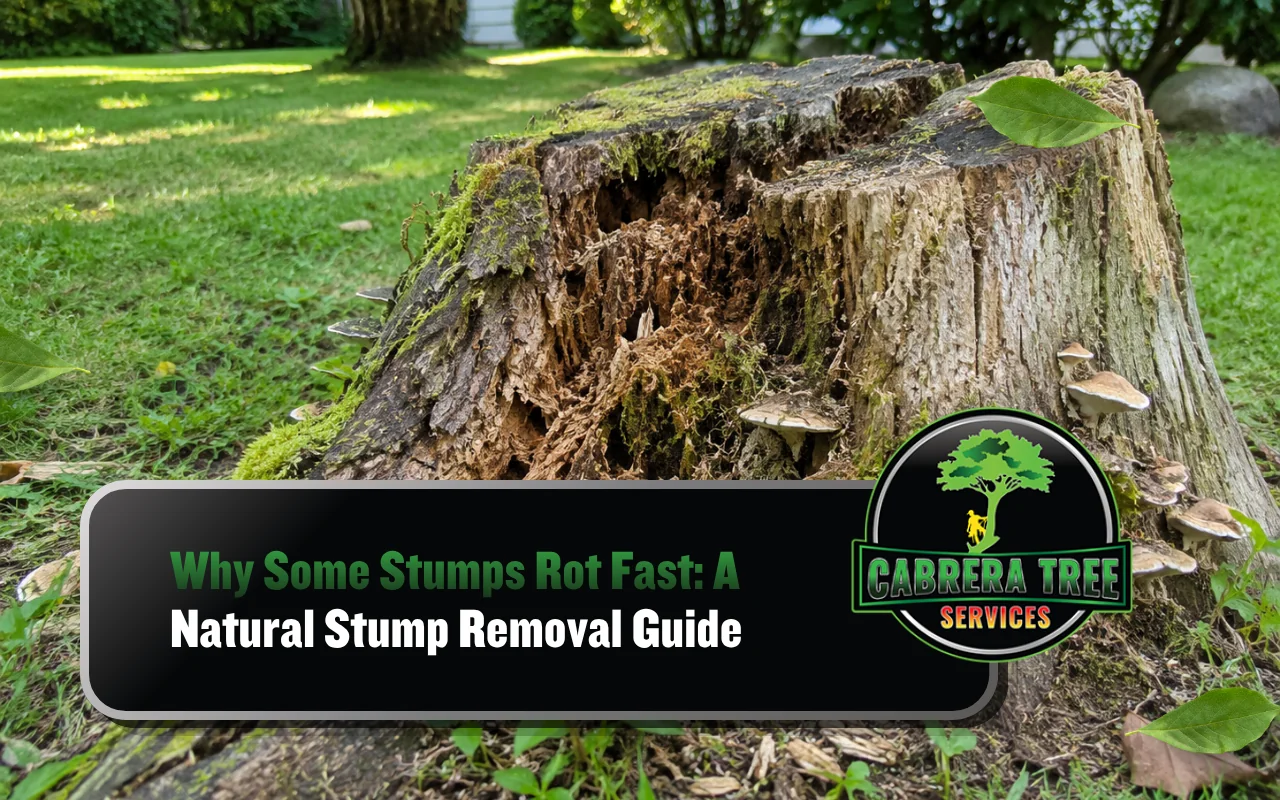
Two stumps cut on the same day can behave completely differently: one turns soft and crumbles within a year, the other is still hard enough to trip over five years later. The difference is rarely luck. It comes down to the wood, the moisture and where the stump sits. If you need the space sooner than nature allows, you can ask for stump removal and compare timelines.
What Makes a Stump Break Down Faster
Wood breaks down when fungi and soil microbes have moisture, air and nitrogen. A fresh stump has plenty of wood but little nitrogen, so decay starts slowly. Natural stump removal is really about giving those organisms better conditions: open the wood, add nitrogen, keep it damp and shade it.
When one of those pieces is missing, the stump just sits there. That is why some rot quickly while the stump next door looks the same year after year.
How the Type of Wood Changes the Timeline
| Wood type | Common in North Alabama | How it usually decays |
|---|---|---|
| Softer woods | Pine, sweetgum, tulip poplar | Often softens within one to two seasons when fed and kept damp |
| Dense hardwoods | Oak, hickory, pecan | Takes noticeably longer, especially large stumps |
| Decay-resistant woods | Eastern red cedar, black locust | Can stay solid for many years; usually better ground out |
Step-by-Step: How to Rot a Tree Stump
These steps work best on softer woods in a spot where waiting is fine. If you are not sure what species you have, you can contact our tree team and describe the stump.
- Cut the stump as low as you safely can to expose fresh wood.
- Drill deep holes across the top and angled holes along the sides.
- Fill the holes with high-nitrogen fertilizer or fresh compost.
- Soak the stump so the material settles into the wood.
- Cover it with mulch or soil and a tarp to hold moisture and shade it.
- Rewet and refeed every few weeks, especially in dry spells.
Diagnosing a Stump That Will Not Rot
- The top is dry and cracked: water runs off instead of soaking in, so cover it and keep it damp.
- No mushrooms or soft spots after a year: the stump probably lacks nitrogen or contact with soil, so add compost and bury the top in mulch.
- Still hard and reddish inside: it may be cedar or another decay-resistant wood, and grinding is the realistic option.
- New shoots keep growing: the roots are alive, so the stump has to be killed before it can rot.
For sprouting stumps, our guide to Epsom salt stump treatment explains how to stop new growth first.
Using North Alabama Seasons to Speed Up Decay
Decay moves fastest when the stump is warm and damp. Late spring and summer are the busiest months for fungi, so a stump treated in early spring has a full growing season ahead of it. Summer dry spells are the main thing that slows progress, which is why watering matters as much as fertilizer.
A stump treated in fall still works, but expect little visible change until temperatures rise again. Keep it covered through winter so it does not dry out, then rewet and refeed as soon as the weather warms.
Where Rotting in Place Makes Sense
Rotting fits a stump at the edge of the property, in a wooded area or in a planting bed where it can sit for a few seasons. It does not fit a stump beside a driveway, in a play area or near the house, where softening wood can attract ants and termites.
When time matters, manual methods are faster. Our guide to removing stumps by hand covers digging and root cutting.
Wrong First Responses We See With Rotting Stumps
At Cabrera Professional Tree Service LLC, we often get calls after a natural method went wrong. The most common mistakes are pouring gasoline or oil on a stump, which contaminates soil and can be a fire hazard, covering a stump without adding any nitrogen, and trying to burn a stump that is still wet inside. Each one adds time instead of saving it.
Turning a Rotted Stump Into Usable Ground
Once the wood is spongy and an axe sinks in easily, chop out the soft material, pull loose roots and fill the hole with topsoil in layers. Leave a small mound, because the soil settles after a few rains. Wait a week or two before seeding or laying sod.
If you would rather skip the wait, grinding clears the stump in one visit. At Cabrera Professional Tree Service LLC, we grind stumps across North Alabama, and homeowners near Fyffe can learn about our Fyffe stump grinding service.
Frequently Asked Questions
How long does it take to rot a stump?
From one or two seasons for small softwood stumps to several years for large or decay-resistant ones.
What is the best material for rotting a stump?
High-nitrogen fertilizer or compost, combined with deep holes, steady moisture and a cover.
Can I burn the stump after rotting it?
Only where local rules allow it, and only once the wood is dry. Roots can keep smoldering underground.
Will a rotting stump attract termites?
Decaying wood can attract insects, so stumps near the house are better removed faster.
Are you licensed and insured?
Yes. Our crew is licensed and insured, and we offer 24/7 emergency tree service.
Natural Stump Removal for Fyffe, AL Homeowners
Rotting in place works when the wood, the moisture and the location are on your side. Check the species first, feed and cover the stump, and switch methods if it shows no change after a season.
When you would rather clear the space now, reach out to Cabrera Professional Tree Service LLC. Call (256) 470-0371 or request your free quote today.