
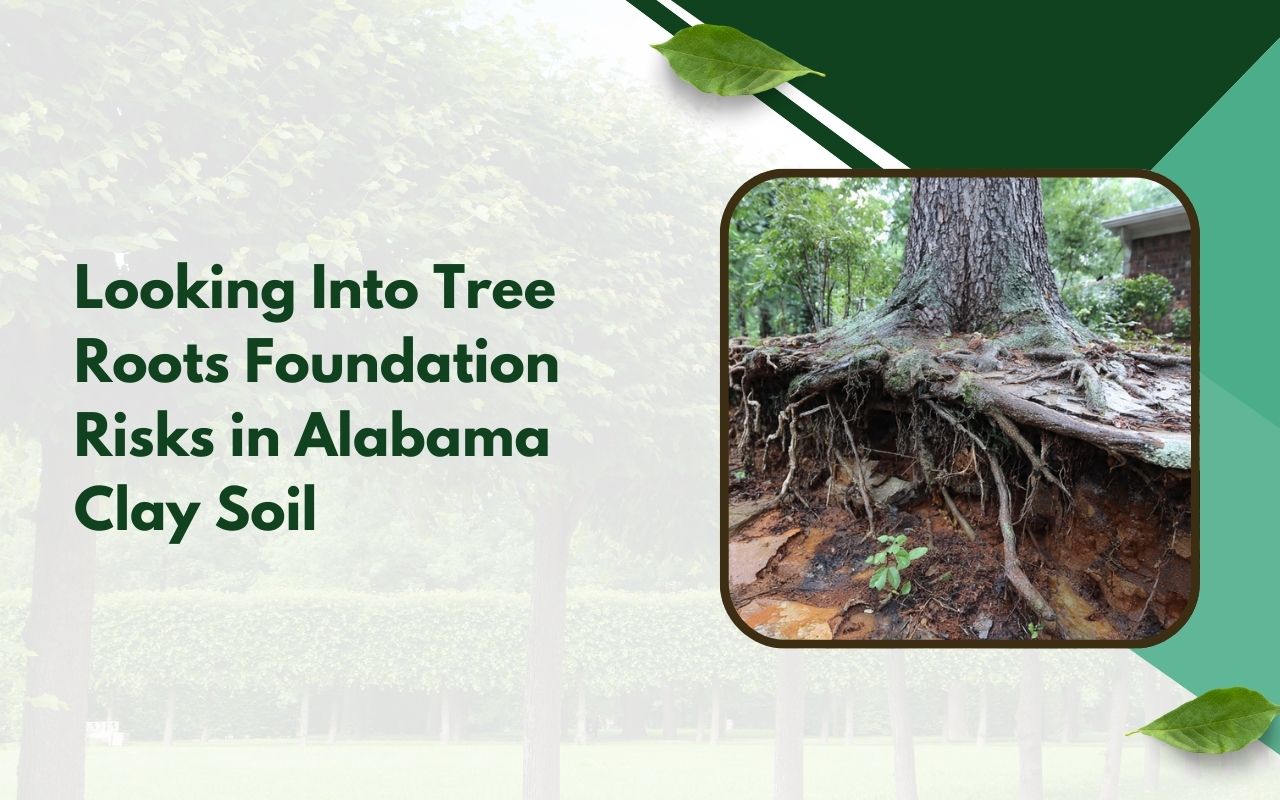
Dig into a world where your home’s stability is quietly threatened by what grows underground. In Alabama, clay soil brings unique challenges, especially with tree roots foundation risks in Alabama clay soil. These risks can stay hidden until damage is already done.
As trees grow, roots search for water and nutrients, and they may reach your foundation. As a result, soil can shift and press against the structure. However, a root barrier and the right planting distance can help protect your home.
How Tree Roots Can Affect Your Foundation
Knowing how roots behave helps you avoid costly repairs. As roots spread to find water, they can press against concrete walls or slabs. Over time, small forces may lead to tiny cracks. In clay soil, those cracks can open and close with the seasons.
Because of that movement, water can seep deeper and weaken the structure. If a tree grows near your house, roots may sit only a few feet from the wall. Therefore, learning these basics helps you plan safer planting distance and consider a root barrier.
- Roots can push against slabs and walls over time.
- Seasonal soil movement can widen small cracks.
- Water can travel through cracks and worsen damage.
Why Alabama Clay Soil Raises the Risk
Alabama’s clay soil holds water tightly. During heavy rain, clay can swell, which leads to soil heave and extra pressure on the foundation. In dry weather, clay can shrink and leave gaps under a slab.
Since this cycle repeats, it can stress your home year after year. Also, clay drains slowly, so damp areas often stay near foundation walls. As a result, roots may follow that moisture and increase tree roots foundation risks in Alabama clay soil.
- Wet clay swells and can lift parts of a foundation.
- Dry clay shrinks and can leave empty spaces below.
- Slow drainage keeps moisture near walls longer.
Common Signs of Root-Related Foundation Damage
Early clues can save you time and money. For instance, wall or floor cracks that slowly widen may come from root pressure. Also, doors and windows that stick can suggest a shift in the base.
In addition, uneven floors or raised patios may point to roots under slabs. Moisture stains in a basement or crawl space can also link to soil movement. If you see these signs, act early to reduce tree roots foundation risks in Alabama clay soil.
- Cracks in walls, floors, or slabs that grow over time.
- Sticking doors or windows and new gaps around frames.
- Uneven patios, sidewalks, or interior flooring.
Smart Tree Choice and Safer Planting Distance
Choosing the right tree and location can lower your risk. Trees with fast, wide roots are often a poor match near homes. Instead, select trees known for smaller root spread when possible.
Just as important, follow a simple planting distance rule. Place a tree at least as far from the house as its mature height. For example, a 30-foot tree should be about 30 feet away. That spacing helps reduce tree roots foundation risks in Alabama clay soil.
Using a Root Barrier to Help Protect Foundations
A root barrier can help steer roots away from your home. These barriers sit in the ground between the tree and the foundation. When installed well, they guide roots downward and away from concrete.
However, placement matters. Barriers often need to reach about two to three feet deep to block the main root zone. Also, they must extend far enough so roots cannot slip around them. Used with proper planting distance, a root barrier can reduce soil heave and pressure near the wall.
Practical Ways to Manage Trees Near Your Home
Ongoing care can limit root growth near your foundation. For example, routine pruning can reduce water demand and slow growth. Also, careful root trimming can reduce roots moving toward the house, although it must be done safely.
Water habits matter too. Overwatering near the home can pull roots closer. Instead, water farther from the foundation when you can, and keep mulch in place to hold steady moisture. To support healthier trees, review local service options like tree trimming in Decatur when growth needs control.
When to Call Pros for Assessment and Maintenance
Sometimes you need an expert eye. A qualified tree pro or structural specialist can review soil moisture, root paths, and foundation condition. Then, they can suggest fixes that match your property.
Depending on the findings, they may recommend a root barrier, safer planting distance, or drainage changes to steady soil moisture. If a tree poses a major threat, you may also consider tree removal in Madison, AL. For an evaluation, reach Cabrera Professional Tree Service LLC through their contact page.
Real Examples from Alabama Homes
In Birmingham, one homeowner saw small basement cracks after planting a water-hungry tree too close. Within two years, cracks widened and doors began sticking. A site review showed roots under the slab, linked to soil heave. After adding a root barrier and moving the tree, the issue stopped growing.
Near Montgomery, fast-growing trees were planted within 20 feet of a home. Over several seasons, roots pressed the wall and created a visible gap outside. After removing the worst trees and adding a barrier, repairs were possible without rebuilding the entire wall. These stories show why tree roots foundation risks in Alabama clay soil deserve early attention.
Frequently Asked Questions
What makes clay soil more risky for foundations?
Clay swells when wet and shrinks when dry. Because of that, it can lift or drop a slab over time.
How far should I keep a tree from my house?
A common guide is to match the tree’s mature height. For example, a 30-foot tree should be 30 feet away.
Can soil heave happen even without large roots?
Yes. Soil heave can occur from moisture swings in clay soil, even without major root pressure nearby.
Does a root barrier fully stop root problems?
It helps a lot when installed correctly. Still, combining it with good planting distance and water control works best.
When should I get a professional inspection?
If you notice cracks, sticking doors, or uneven slabs, schedule a visit. Early checks can prevent bigger repairs.
Keeping Your Foundation Safer in Alabama Clay Soil
Reducing tree roots foundation risks in Alabama clay soil takes planning and steady upkeep. Start with smart tree choice, keep a safe planting distance, and use a root barrier when needed. Also, manage water to avoid big moisture swings that trigger soil heave.
By noticing early signs and getting help when needed, you can protect your home without losing the benefits of shade and beauty. Take action now, and your foundation can stay stronger for years.