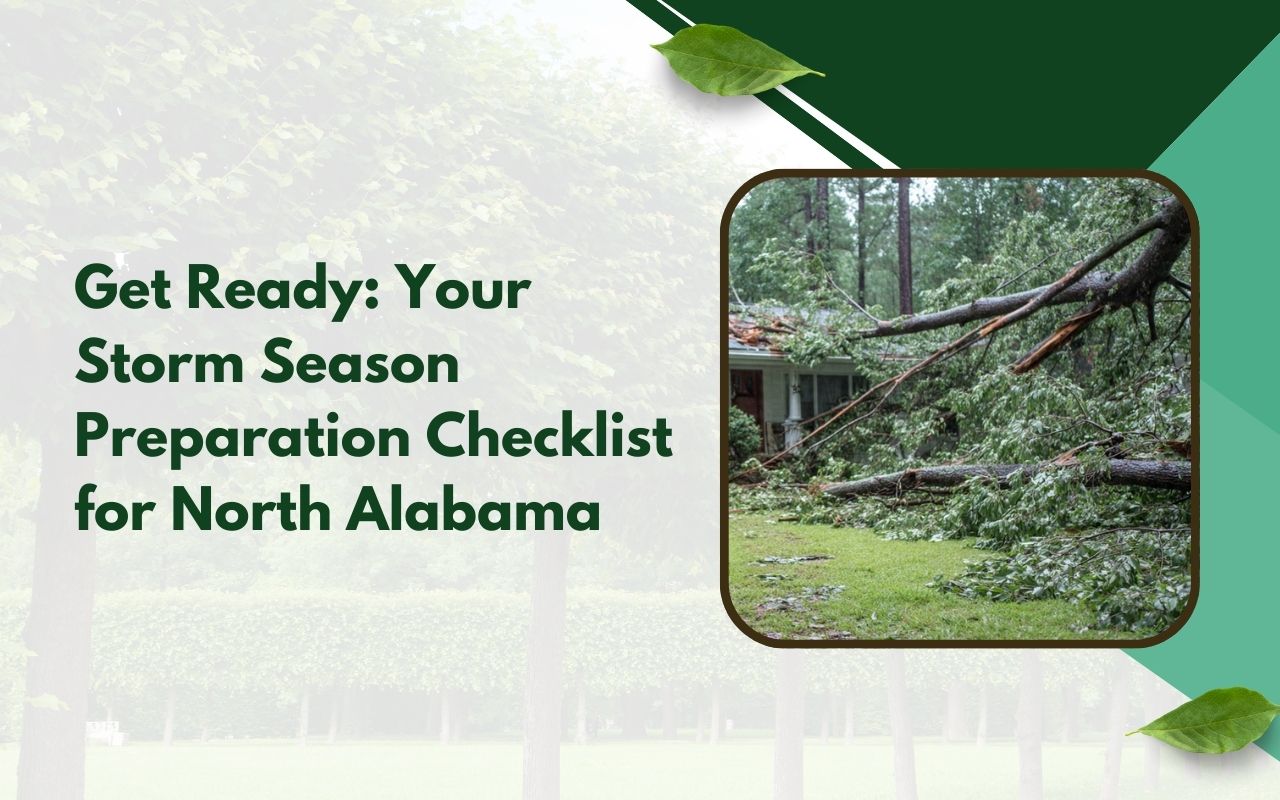
Every storm season in North Alabama brings new challenges, so planning ahead helps protect your home and reduce stress. This storm season preparation checklist in North Alabama covers key steps like pruning before storms, securing outdoor items, and knowing when tree work is needed. With the right plan, your home can stay safer when skies turn dark.
Even small actions matter, such as checking cabling and removing high-risk branches. As a result, you can reduce damage risks and feel more confident when severe weather approaches.
Evaluate Tree Health Before Storm Season
Checking tree health is a smart first step in your storm season preparation checklist in North Alabama. Walk your yard and look for trunk cracks, dead limbs, or fungus near the base. If you see warning signs, write them down right away. Healthy trees handle wind better, while weak trees can fail fast.
- Look for broken or hanging limbs after past storms
- Check for hollow spots, deep splits, or peeling bark
- Watch for fungus, soft soil, or raised roots near the trunk
If you need help deciding what you are seeing, you can explore signs that call for professional help through a storm tree removal service and compare the risks before the next storm arrives.
Prune Before Storms to Reduce Risk
Pruning before storms helps lower wind pressure and reduces the chance that limbs will break. Focus on branches that hang over roofs, driveways, power lines, or play areas. Also, clean cuts support better growth, so your trees stay stronger over time.
- Remove dead, weak, or rubbing branches
- Thin crowded limbs to let wind pass through
- Clear limbs away from roofs and utility lines
For local trimming support, review what to expect from tree trimming in Decatur, especially if your canopy is dense or close to structures.
Use Cabling When Trees Need Extra Support
Some trees have split trunks or weak branch unions, so cabling can add support and help reduce failure. It works best when the tree is still healthy enough to keep. However, cabling is not a cure-all, so it should match the tree’s condition and risk level.
- Support weak branch unions that may split in high winds
- Reduce movement that leads to cracks over time
- Protect valuable shade trees that are worth saving
Even so, if the tree shows severe damage, cabling may not be enough. In that case, it is safer to review removal options before the next storm hits.
Know the Removal Criteria for High-Risk Trees
Removal criteria matter because some trees are too dangerous to keep. If a tree leans heavily, has major root damage, or shows wide internal cracks, removal may be the safest choice. This step is a core part of any storm season preparation checklist in North Alabama, since falling trees can cause major damage fast.
- Heavy lean that worsens over time
- Large root lifting, soil heaving, or exposed roots
- Deep trunk splits, large cavities, or major decay
When you are unsure, a certified arborist can help you choose whether to prune, cable, or remove. As a result, you avoid guesswork when safety is on the line.
Secure Outdoor Furniture and Yard Equipment
Loose patio items can become dangerous in strong winds, so securing them is a must. Anchor large pieces with straps, and store smaller items in a garage or shed when storms are near. Also, group items in a protected corner to reduce movement.
- Strap down grills, tables, and large chairs
- Store light items like cushions, toys, and decor
- Empty planters and wheelbarrows to avoid tipping
Therefore, you lower the chance of broken windows, roof damage, or harm to nearby property.
Reinforce the Outside of Your Home
Before storm season, check windows, doors, siding, and roofing. Small gaps can let wind and water in, which often leads to costly repairs. Fix cracks with caulk, tighten loose shutters, and replace worn seals. Also, check for missing shingles and loose flashing around vents and chimneys.
If your garage door is a weak point, bracing kits can help it resist pressure. In addition, consider storm shutters or temporary window protection when storms are likely.
Frequently Asked Questions
How early should I start a storm season preparation checklist in North Alabama?
Start several weeks before peak storm months, so you have time for pruning, repairs, and supplies without rushing.
What is the safest way to handle pruning before storms?
Remove dead or weak limbs first, and avoid major cuts during active storm threats. For large limbs near roofs or lines, hire a pro.
When does cabling make sense for a tree?
Cabling helps when a tree is mostly healthy but has weak branch unions or splits that need support. It is not ideal for trees with major decay.
What are the main removal criteria I should watch for?
Major lean, root damage, deep trunk cracks, and significant decay are key warning signs. If you see them, get an expert opinion quickly.
What should I do if a storm damages a tree near my home?
Stay clear of hanging limbs and downed lines, then contact a professional for a safe assessment and cleanup plan.
Build an Emergency Kit and Family Plan
Storm planning is not only about the yard. Stock supplies for at least three days, and make sure everyone knows the plan. Choose a safe room, list emergency contacts, and practice roles so decisions are quick when storms hit.
- Water, shelf-stable food, and a manual can opener
- Flashlights, batteries, and a battery-powered radio
- First-aid supplies and needed prescriptions
If you want to speak with Cabrera Professional Tree Service LLC about storm readiness, you can use the contact page to ask about pruning, cabling, or removal criteria for your property.
Recap: Stay Safer This Storm Season
Storm season preparation works best when you act early. Check tree health, prioritize pruning before storms, and use cabling when support can help. Also, follow removal criteria for trees that are too risky to keep. Keep this storm season preparation checklist in North Alabama handy, review it yearly, and protect what matters most.