
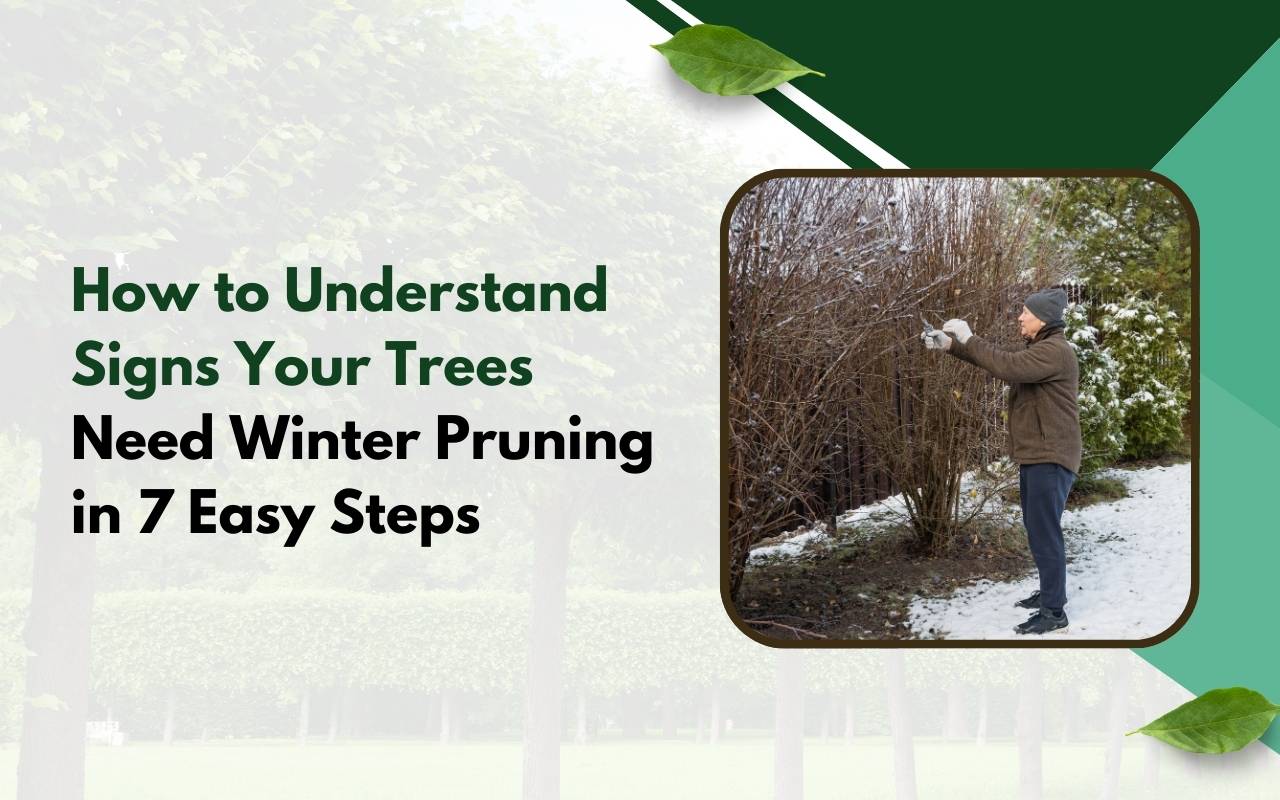
Signs Your Trees Need Winter Pruning can be easy to miss, yet they matter a lot for safety and tree health. When you spot them early, you reduce the risk of falling branches and storm damage during the cold months.
As you learn these simple checks, you will feel more confident caring for your trees. With a clear plan, you can protect your landscape, avoid sudden emergencies, and keep your property looking neat all winter.
Benefits of Noticing Signs Your Trees Need Winter Pruning
When you notice winter pruning needs on time, you give your trees a better chance to grow strong. During dormancy, cuts heal more easily, pests are less active, and you can see the tree’s structure more clearly.
- Reduce the chance of falling branches during winter storms.
- Improve overall tree shape, balance, and long-term strength.
- Help sunlight reach lower branches and nearby plants.
- Lower the risk of disease spreading through dead or weak wood.
- Plan work calmly instead of reacting to sudden damage later.
Key Signs Your Trees Need Winter Pruning to Stay Safe
Before cold weather arrives fully, it helps to walk your yard and look closely at each tree. While you do this, pay special attention to any branch that looks weak, damaged, or out of place.
- Dead or bare branches that do not grow leaves in the growing season.
- Cracked, split, or hanging limbs after wind or storms.
- Branches crossing or rubbing against each other, creating wounds.
- Heavy limbs stretching over driveways, roofs, or play areas.
- Large branches growing at sharp, narrow angles from the trunk.
- Signs of decay, such as mushrooms, soft wood, or dark patches.
- Thick, crowded canopies where wind and light cannot pass through.
Simple Real-Life Examples of Winter Pruning Needs
For example, imagine a maple tree with one big limb hanging over your driveway. In summer it looks lush, but in winter ice could weigh it down and cause it to snap. Pruning that limb before snow arrives can prevent major damage to cars or pavement.
As another example, picture a tree with several dead branches above a walkway. They might not fall right away, yet they still pose a danger. By removing those branches during winter, you keep family, guests, and pets much safer.
Winter Pruning vs Waiting Until Spring
Many people delay pruning because they worry about harming their trees. However, winter is often a better time than spring for most species. Leaves are gone, sap flow is slower, and you can see the tree’s true shape more clearly.
On the other hand, a few trees prefer light pruning at other times. Therefore, it is wise to ask a local expert about timing for your specific species. With good advice, you can plan pruning in a way that supports long-term health.
How to Check Tree Health Before Winter Pruning
Before you make any cuts, it is important to understand how healthy each tree really is. A careful review helps you choose which branches to remove and which to protect, especially on older or stressed trees.
- Walk around the tree and look at it from several angles.
- Check the trunk for cavities, peeling bark, or fungal growth.
- Look at major branches for cracks, decay, or heavy lean.
- Notice whether the canopy looks even or one-sided and unstable.
- Review past damage from storms, construction, or nearby digging.
For more detailed guidance, consider a professional
tree health assessment. During this visit, a trained specialist can identify hidden problems and suggest the safest pruning plan for winter.
DIY vs Professional Winter Tree Pruning
Some light pruning is safe for many homeowners to handle. However, once you see big limbs, decay, or branches near power lines, it is time to get expert help. At that point, the work becomes dangerous without the right tools and training.
- Do-it-yourself work is fine for small, low branches you can reach safely from the ground.
- Use clean, sharp tools and make smooth cuts just outside the branch collar.
- Never climb high into trees without proper safety gear and experience.
- Call a professional for branches over roofs, near wires, or above 6–8 feet.
- Choose certified arborists who understand local tree species and safe pruning standards.
If you notice clear Signs Your Trees Need Winter Pruning but feel unsure about the risk, you can book
professional winter tree pruning services. This way, you protect both your trees and everyone who walks under them.
Winter Pruning Tips for Beginners
If you are new to tree care, winter can feel intimidating at first. Still, by starting small and following simple rules, you can support your trees without overdoing it or causing harm.
Begin with young trees, where small, careful cuts can shape the future structure. Additionally, remove only what is clearly dead, damaged, or diseased. When in doubt, it is always safer to stop and ask a professional for advice.
Frequently Asked Questions
What are the most common Signs Your Trees Need Winter Pruning?
The most common signs include dead or broken branches, limbs rubbing together, heavy overhanging branches, and areas of visible decay. Also, very thick canopies that block light or wind are strong clues that pruning would help.
Can I prune my trees myself during winter?
Yes, you can handle small, low branches if you feel safe and use proper tools. However, avoid large limbs, tall ladders, and any work near power lines. In those cases, it is best to hire a trained professional.
Is winter always the best time to prune trees?
Winter is a good time for many species because trees are dormant and easier to inspect. Even so, some flowering or sensitive trees need pruning at different times. Checking with a local arborist helps you choose the right season.
How often should my trees be pruned?
Most mature trees benefit from a careful review every one to three years. Younger trees may need more frequent, light shaping to build a strong structure. Regular checks help catch small issues before they turn into big problems.
When should I call a professional tree service?
You should call a pro when branches are large, high, decayed, or near buildings and power lines. Also, reach out if you feel unsure about where to cut. A professional service can create a safe, long-term plan for your property.
Protect Your Landscape with Expert Winter Pruning Help
As you look ahead to the colder months, it makes sense to plan your pruning early. By acting before storms arrive, you reduce risk, improve tree health, and keep your yard looking tidy and welcoming for everyone.
If you would like tailored advice for your property, you can
contact our team. Together, we can review your trees, create a safe pruning strategy, and support a healthier landscape all year long.