Spotting the first Signs of tree diseases in North Alabama can feel like noticing a plant that looks unwell. Since North Alabama is full of greenery, knowing what to look for can help you protect your trees before problems grow. Many homeowners see trees as low upkeep, yet trees can get sick, too.
Issues like canker, blight, leaf spot, and dieback can sound scary. However, early notice can keep your landscape thriving. For example, you may see leaf spots or bark color changes on a simple yard walk. If you ignore these clues, the damage may spread and harm your whole yard.
Understanding Common Tree Diseases in North Alabama
Many diseases spread across North Alabama because the climate is warm and humid, and the seasons shift fast. Homeowners often notice trouble too late, when damage is already severe. The most common problems include canker, blight, leaf spot, and dieback. Each one affects trees in a different way.
Still, learning the Signs of tree diseases in North Alabama helps you react sooner. Some issues show up right after heavy rain. Others build slowly over weeks. Therefore, a quick check from trunk to canopy can help you catch small changes early.
Recognizing Symptoms of Canker
Canker often appears as sunken bark areas or lesions. These spots may look dark, wet, or dead next to healthy bark. At first, you may notice tiny cracks or light discoloration. Later, the bark can peel back and expose wood underneath.
- Sunken or dead-looking bark patches
- Cracks, peeling bark, or exposed wood
- Nearby branches turning brown or thinning out
Since canker can weaken structure, early action matters. Look closely at pruning cuts and storm wounds, because they can be entry points. If you need to reduce stress and remove risky limbs, consider targeted shaping through tree pruning in Madison, AL.
Identifying Signs of Blight
Blight can make leaves turn brown or black in patches, and then drop early. Leaves may curl, shrivel, or show tiny speckles. Sometimes you can see fungal growth on foliage or stems. In addition, branch tips may die back, and new shoots can struggle.
- Dark patches on leaves that spread quickly
- Curled or shriveled leaf edges
- Premature leaf drop and dull-looking canopy
Blight often spreads after cool, damp nights. So, check both sides of leaves after rainy stretches. If the canopy looks thin or lifeless, blight may be the cause. Also, removing weak growth can improve airflow, which supports recovery.
Spotting Leaf Spot Disease
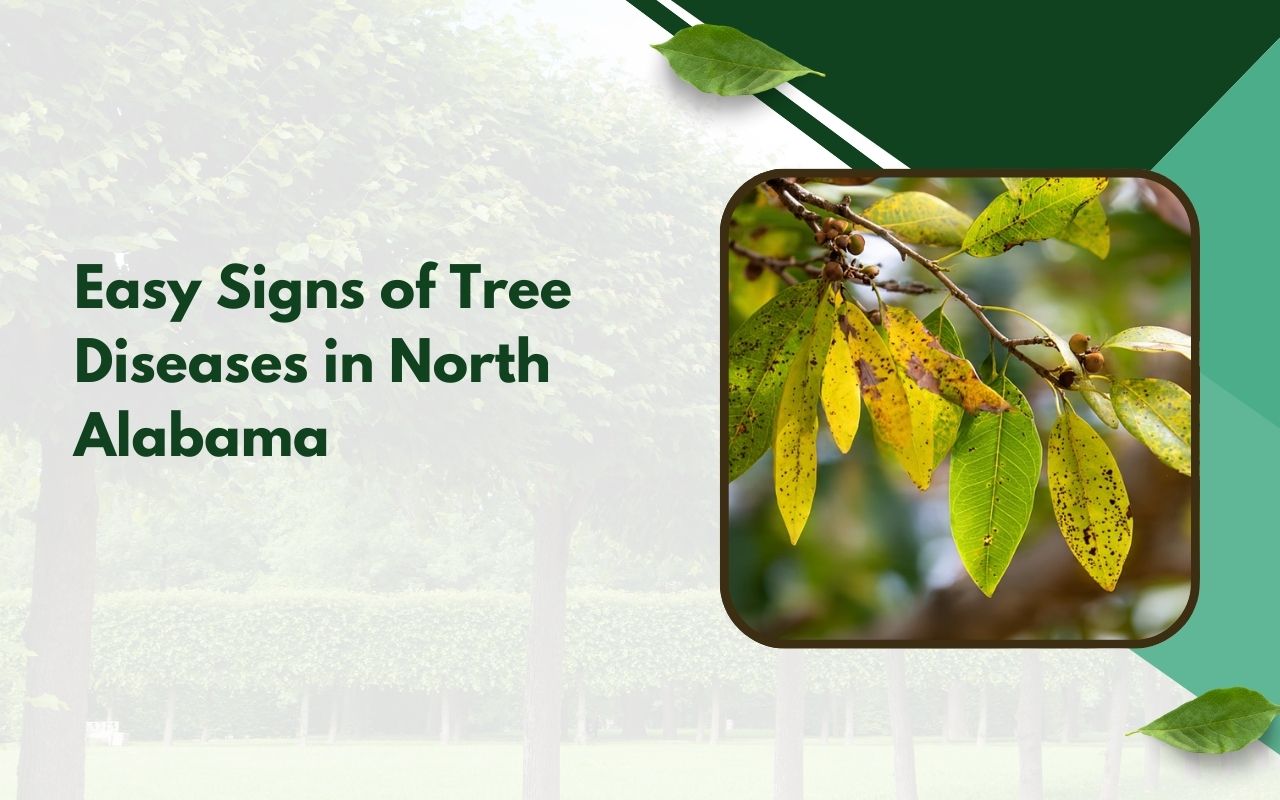
Leaf spot shows up as round or irregular marks, often with dark edges and lighter centers. Spots can be tiny or grow larger over time. As a result, leaves may yellow and fall early, making the tree look sparse.
- Spots with dark borders and lighter centers
- Yellowing leaves that drop too soon
- More symptoms during humid, still weather
Leaf spot is often worse when trees are crowded and air cannot move well. Therefore, thinning dense areas and cleaning up fallen leaves can reduce repeat issues. If you want to improve canopy balance and airflow, tree trimming in Madison, AL can support healthier growth.
Detecting Early Signs of Dieback
Dieback usually starts at branch tips. You may see small twigs that look dry, brittle, or weak. Over time, more of the canopy turns brown, and leaves can drop early. In severe cases, large limbs or the tree top can decline toward the trunk.
Because dieback can come from drought, soil issues, pests, or disease, look for added clues. For instance, check soil moisture, scan for insect holes, and compare nearby trees. This way, you can connect dieback to canker, blight, or other stressors.
Importance of Prompt Action
When you notice Signs of tree diseases in North Alabama, acting fast makes a big difference. If you delay, problems can deepen and become harder to manage. For example, early leaf spot or a small canker can often be handled with focused pruning and careful care.
Also, treating early can help protect nearby trees. Even one infected branch can release spores that travel in wind or rain. So, quick steps support the whole landscape, not just one tree.
Preventive Measures to Safeguard Your Trees
Prevention lowers the chances of serious disease. Start by choosing tree types that handle North Alabama conditions well. Good planting depth and drainage help trees stay strong. In addition, removing dead limbs and fallen leaves reduces places where fungi can survive.
- Choose disease-resistant trees when possible
- Water correctly and avoid overwatering
- Sanitize pruning tools between cuts and trees
Healthy trees fight problems better. Therefore, steady watering, mulching, and balanced feeding can improve natural defenses. Clean tools are also important, since they limit germ spread from one tree to another.
Consulting with Local Tree Experts
Sometimes the cause is not clear. That is when local experts can help with diagnosis and care. Professionals who know the Signs of tree diseases in North Alabama can explain what is happening in simple terms, so you can make smart choices.
An arborist may inspect roots, trunk, branches, and leaves, and may take samples when needed. Then, they can suggest pruning, soil support, or approved treatments. If you want a clear plan for your property, reach out to Cabrera Professional Tree Service LLC through the contact page.
Frequently Asked Questions
What are the most common Signs of tree diseases in North Alabama?
Common warning signs include leaf spotting, early leaf drop, bark lesions, branch tip browning, and thinning canopies. Checking trees often helps you notice changes early.
How can I tell if a tree has canker?
Look for sunken bark, cracks, peeling areas, or exposed wood. Branches near the spot may thin out or die back, especially after pruning wounds or storm damage.
When does blight spread the fastest?
Blight often spreads during cool, damp periods, especially after rain. Therefore, inspect leaves soon after wet weather and watch for dark patches and curling.
Is leaf spot always a serious problem?
Not always. Mild leaf spot can be managed with cleanup and better airflow. However, repeated or heavy spotting can weaken trees over time.
What should I do first if I notice dieback?
Start by checking soil moisture, looking for insect damage, and inspecting the trunk and branches. If you see ongoing decline, a professional diagnosis can speed up the right solution.
Implementing Effective Treatment Plans
After diagnosis, follow a clear plan. First, prune infected branches and cut into healthy wood to remove all damaged tissue. Then, clean tools after each cut to reduce spread. Apply recommended treatments as directed, focusing on affected areas while avoiding unnecessary contact with healthy foliage.
Next, monitor your tree for several weeks. Track new spots, wounds, or canopy changes, and repeat care if needed. Finally, support recovery with proper watering and mulch, because stronger trees can rebound more easily.
Ensuring Tree Health for Years to Come
Watching for canker, blight, leaf spot, and dieback is vital in North Alabama. Early notice helps you react quickly and protect trees before problems spread. In other words, small steps now can prevent big losses later.
By combining routine checks, prevention, and expert guidance when needed, you can keep a landscape full of healthy, thriving trees. Keep a simple inspection habit, and you will spot changes before they become costly.