
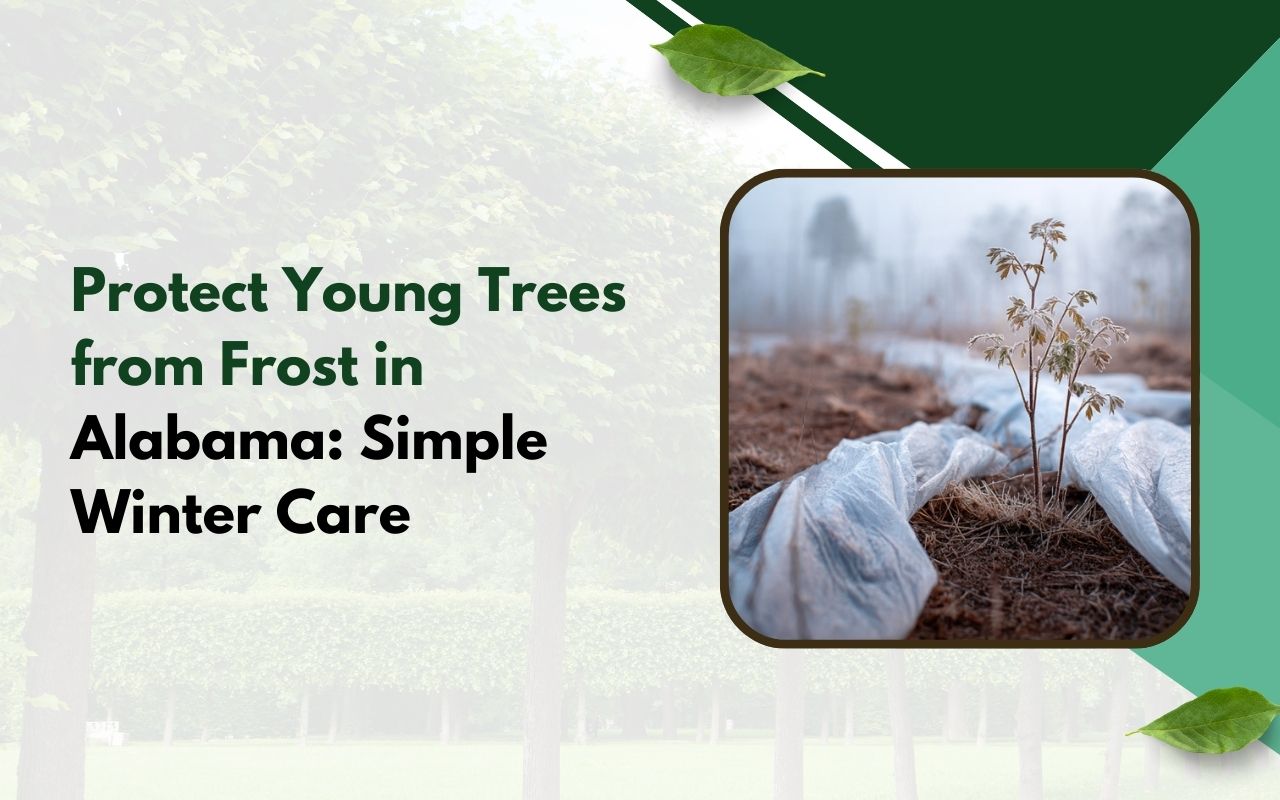
Seeing your hard work in the garden freeze after an unexpected cold night can feel heartbreaking. In Alabama, late cold snaps can arrive when winter seems over. That is why knowing how to Protect Young Trees from Frost in Alabama matters for any gardener who wants saplings to thrive.
Young trees hold future shade and beauty, plus your time and effort. Simple steps can make a big difference. Use frost cloth, try watering before freeze, and keep a mulch ring at the base. These practical methods often prevent damage and help your landscape stay strong through surprise weather.
Understanding Frost Risks in Alabama
Alabama winters are often mild, yet sudden temperature drops still happen. A late frost can form ice on leaves and buds. As a result, the tree struggles to feed and grow. Young saplings are at higher risk because their bark is thin and their cells handle cold stress poorly.
Frost risk changes by region. North Alabama often has colder nights, while coastal areas can freeze after a cool sea breeze. Therefore, check local frost advisories and plan ahead. When you know your county’s patterns, you can time protection steps and Protect Young Trees from Frost in Alabama with less stress.
Selecting the Right Frost Cloth
Frost cloth works best when it blocks frost but still breathes. Choose a fabric that lets air and moisture move through. That way, it traps warmer air near leaves without causing daytime overheating. Also, pick a size that covers the tree from the top down to soil level.
- Look for breathable, garden-made frost cloth instead of plastic.
- Choose tear-resistant, UV-stabilized fabric for repeat use.
- Pick a size that reaches the ground to hold heat in place.
Thickness matters too. Frost cloth is often labeled by gsm. A 30–50 gsm range is usually easy to handle and still helpful. Thinner cloth may fail in a harder frost, while thicker cloth can block too much light. With the right pick, you can Protect Young Trees from Frost in Alabama more reliably.
Proper Installation of Frost Cloth
Put the cloth on before temperatures drop, ideally in late afternoon. Drape it over the top so it falls evenly on each side. Then, secure the edges at the base using rocks, stakes, or a light layer of soil. This helps stop wind from lifting it.
- Create a loose “tent” shape to hold warm air over the canopy.
- Keep the cloth from pressing on leaves to reduce ice contact.
- Remove or vent it during warmer daytime hours when needed.
Do not crush branches when fastening. Instead, leave an air pocket for better insulation. A small gap also reduces rubbing when wind blows. If you want a pro to check weak limbs before winter, explore tree pruning in Scottsboro, AL to help saplings stay sturdy.
Watering Before Freeze
Watering before freeze can help soil hold heat longer overnight. Moist soil releases warmth slowly, which supports the root zone when temperatures dip. However, avoid soaking the ground. Instead, water enough to reach the roots, then let excess drain.
- Water in the afternoon before a cold night arrives.
- Check soil 4–6 inches deep near the drip line for moisture.
- Use slow watering so roots absorb water without pooling.
When the soil is dry and crumbly, trees get stressed faster. By keeping moisture steady, you improve cold tolerance. This is one of the simplest ways to Protect Young Trees from Frost in Alabama, especially during sudden cold snaps.
Mulch Ring Basics for Warm Roots
A mulch ring adds insulation and reduces sudden temperature swings near the roots. Spread wood chips, straw, or shredded leaves in a 2–3 inch layer around the base. Still, keep mulch about two inches away from the trunk to prevent rot and pests.
- Use organic mulch to help trap soil warmth overnight.
- Keep the ring wide, but keep mulch off the trunk.
- Check every few weeks and fluff or refill compacted areas.
Because Alabama weather shifts quickly, mulch helps keep roots steadier. As a result, saplings often recover better after a cold event. If your tree canopy needs cleanup so covers fit better, consider tree trimming in Madison, AL for safe shaping before frost season.
Creating a Simple Protective Barrier
Wind can make frost damage worse by pulling heat away from bark and leaves. A simple wind barrier can help, especially in open yards. Use wooden stakes with burlap, cardboard, or fabric panels. Place the barrier about two feet from the tree so air can still move.
In Alabama, colder winds often come from the north and northwest. So, position the barrier on that side first. When combined with frost cloth and a mulch ring, you create layered protection that supports long-term health.
Monitoring Weather Conditions Closely
Tracking forecasts helps you act early instead of rushing at night. Use local news, a weather app, or extension updates for frost alerts. Set notifications near 32°F so you can prep your frost cloth and check soil moisture in time.
Also, learn your yard’s microclimates. Place a small thermometer at sapling height away from warm walls. Over time, you will notice cold pockets in low spots. Then, you can Protect Young Trees from Frost in Alabama with better timing and fewer surprises.
Emergency Frost Protection Measures
Sometimes a freeze arrives without warning. In that case, use blankets, burlap, or old bedsheets as a quick cover. Secure the edges at the ground so warmth stays in. Then, remove covers midday once temperatures rise above freezing.
You can add gentle warmth with outdoor-rated non-LED Christmas lights under the cloth. They can raise the temperature slightly, which may help buds survive. Still, keep bulbs from touching leaves, and avoid open flames. For site-specific help, Cabrera Professional Tree Service can advise on safe protection steps in your yard.
Winter Recovery After Frost Damage
After the last frost, inspect leaves, buds, and bark. Watch for blackened foliage, split bark, or brittle twigs. Use clean pruning shears to cut dead growth back to healthy wood. This reduces disease risk and supports spring regrowth.
Then, support recovery with steady watering as weather warms. Add a balanced fertilizer in early spring, but avoid heavy feeding until you see active growth. Keep the mulch ring in place for soil stability. With consistent care, many saplings rebound well. When damage looks severe, Cabrera Professional Tree Service can help assess pruning needs and tree stability.
Frequently Asked Questions
When should I cover a young tree with frost cloth?
Cover it in late afternoon before temperatures drop, and secure the cloth to the ground to hold warmth.
Is watering before freeze always helpful?
It helps when soil is dry, because moist soil holds heat longer. Still, avoid waterlogging the roots.
How thick should a mulch ring be for cold nights?
A 2–3 inch layer is usually enough. Keep mulch a couple inches away from the trunk.
Can I use plastic instead of frost cloth?
Plastic can trap moisture and cause leaf burn. Breathable frost cloth is safer for most saplings.
Should I leave frost cloth on during the day?
If the day warms up, remove or vent it. That way, you avoid overheating and allow light in.
Helping Your Saplings Thrive Long-Term
Alabama winters may be mild, yet late frosts can still hit hard. By combining frost cloth, watering before freeze, and a mulch ring, you reduce the risk of damage. Add wind barriers and watch forecasts, and your plan becomes even stronger.
With smart prep and quick action, you can Protect Young Trees from Frost in Alabama and support healthy growth each spring. If you want guidance tailored to your property, reach out to Cabrera Professional Tree Service for practical help with winter tree care.