Clear Brush Carefully: Top Solutions for Brush Removal in Decatur AL. However, facing unwanted overgrowth can feel endless, especially when dense brush seems to multiply overnight. In Decatur, AL, homeowners and land managers often struggle to maintain property as vegetation spreads fast.
Brush Removal in Decatur, AL improves curb appeal and, more importantly, lowers fire risk. Therefore, with the right methods and tools, you can handle small yards or large tracts with less strain. Cabrera Professional Tree Service can also help when the job is bigger than a weekend.
Understanding the Brush Removal Process
Start by defining the scope of your project. Brush Removal in Decatur, AL often includes cutting shrubs, small trees, and tangled vines that grew unchecked. As a result, a clear plan helps you remove vegetation before it blocks views or increases fire risk.
Use a simple, staged approach: assessment, cutting, and disposal. Then, inspect the land for missed spots or new sprouts. This workflow supports steady overgrowth removal and keeps your lot clearing goal realistic.
- Define the areas you want to open up first.
- Cut and remove brush in small sections.
- Dispose of debris safely to reduce fire risk.
Assessing Your Property’s Brush Density
Begin with a slow walk-through to see how thick the brush has become. For lot clearing, measure sections to estimate how much work is needed. Next, mark dense zones and note hazards like thorny plants or wildlife nests.
Also, consider the vegetation type, from light weeds to woody saplings. Denser brush usually needs stronger tools or equipment. Consequently, mapping density zones saves time and reduces cost while lowering fire risk sooner.
- Mark heavy growth areas with flags or paint.
- Identify access paths for hauling debris.
- Note hazards like rocks, stumps, or nests.
Selecting the Right Tools for Brush Removal
Choose tools based on brush size and toughness. For light overgrowth removal, loppers, pruning shears, and hand saws work well. Additionally, wear gloves to protect from thorns and splinters, and use a wheelbarrow to speed cleanup.
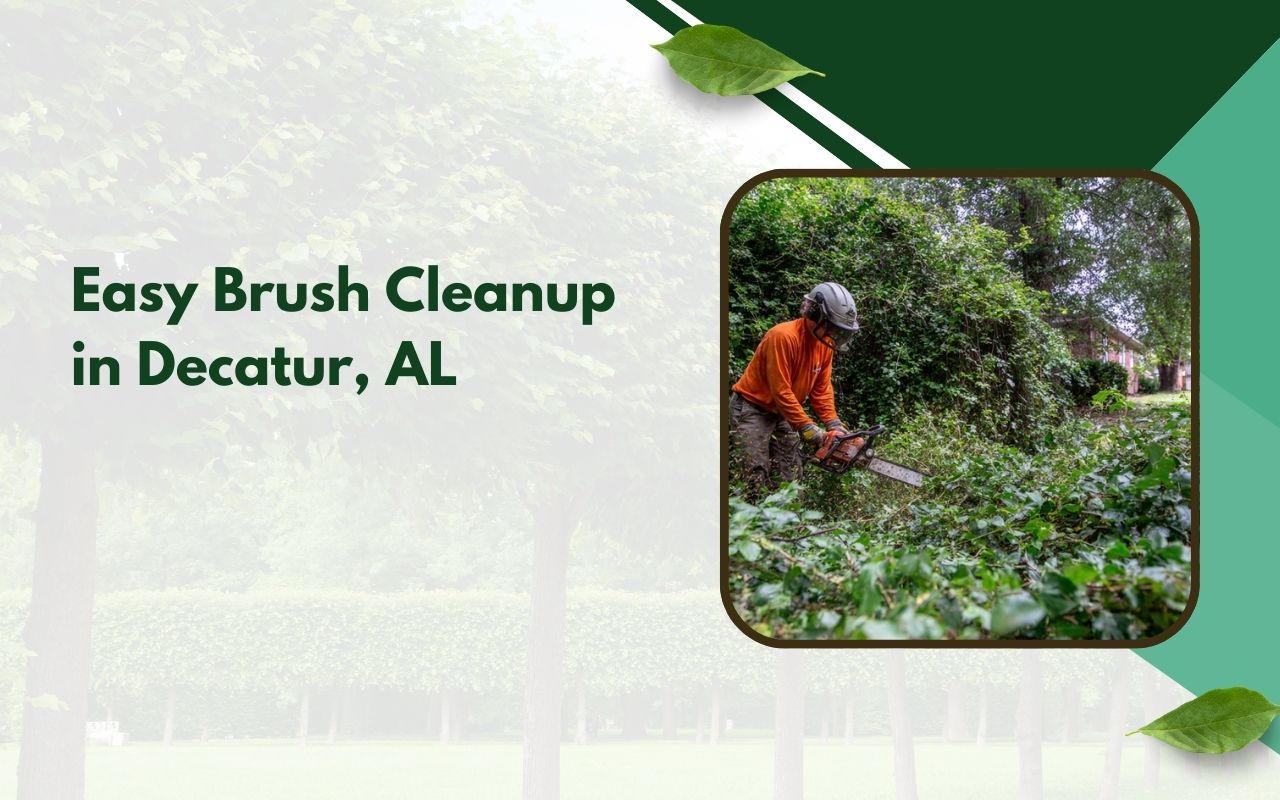
For thicker patches, use a brush cutter or chainsaw. Still, check blades for sharpness before starting. Dull gear makes work harder and can raise fire risk if metal strikes rocks or hidden debris.
- Hand tools for thin weeds and vines.
- Brush cutter for tall grass and thick stems.
- Chainsaw for small trees and woody growth.
Safety Precautions During Brush Removal
Wear protective gear every time. Use thick gloves, safety goggles, and steel-toed boots to reduce injury. Moreover, add ear protection when using power tools, and wear bright clothing if working near a road.
Keep the workspace clean to prevent trips and reduce fire risk. For example, keep water or a fire extinguisher nearby, and avoid windy days. If you want a safer, faster path, Cabrera Professional Tree Service can handle tougher sites with trained crews.
Manual Brush Removal Techniques
Manual work is best for smaller areas or detail control. Cut saplings and vines close to the ground, and work in sections to avoid fatigue. Then, pull smaller weeds and roots when possible to slow regrowth and support long-term overgrowth removal.
Stack brush into neat piles for hauling or approved burning. As a result, you stay organized and keep fire risk down by limiting loose, dry debris across the property.
Mechanical Brush Removal Options
For heavy growth, rental equipment can save days of labor. A skid steer, mini excavator, or brush mower can clear fast and turn vegetation into mulch. Therefore, this method reduces hauling and can make lot clearing easier on large lots.
If your land is big or access is tricky, professional crews can help. In many cases, Cabrera Professional Tree Service can bring the right machines and safety routines to finish sooner and reduce fire risk quickly.
Chemical Brush Removal Methods
When regrowth is stubborn, approved herbicides can help. Apply product carefully to leaves, stems, or fresh-cut stumps, and follow label directions. Although results take time, treatment can reach roots that tools miss.
Choose low-toxicity options when possible and watch wind direction to prevent drift. After plants die back, mow or till the area to speed cleanup and keep your lot clearing progress moving.
Eco-Friendly Approaches to Brush Removal
If you want a low-impact option, consider grazing animals like goats. They can reduce overgrowth removal needs without heavy equipment. Also, fence them into target zones so they stay on the right sections.
Sheet mulching is another smart approach. Lay cardboard over cleared soil, then add compost and wood chips to block regrowth and improve soil. As a result, you reduce waste and keep fire risk lower without harsh chemicals.
Proper Disposal of Cleared Brush
Disposal matters as much as cutting. Chipping turns branches into mulch you can reuse around trees and beds. Consequently, you reduce waste while helping soil hold moisture and resist weeds.
If you cannot chip on site, haul debris to a green waste facility. Some areas also offer yard waste pickup. If burning is allowed, check local rules, keep piles small, and have water ready to protect your property and reduce fire risk.
Frequently Asked Questions
What is the safest way to start Brush Removal in Decatur, AL?
Start with a walk-through, mark hazards, wear protective gear, and clear in small sections to reduce strain and fire risk.
How do I know if I need mechanical help for lot clearing?
If brush is dense, woody, or spread across large acreage, renting equipment or hiring a crew can save time and improve safety.
Does overgrowth removal help with pests and snakes?
Yes. When you reduce thick cover, you remove hiding spots, which can lower pest activity near structures.
What should I do with the debris after clearing brush?
Chip it for mulch, haul it to a green waste facility, or follow local rules for pickup or burning, if permitted.
How can I reduce fire risk after clearing?
Maintain defensible space, remove dry piles quickly, and keep vegetation trimmed so new growth stays manageable.
Maintaining Your Cleared Property
Maintenance keeps progress from disappearing. Schedule checks and remove new sprouts early, before they become a dense patch. Then, combine light manual trimming with occasional mechanical help for best results.
With steady care, Brush Removal in Decatur, AL becomes easier each season. For ongoing support, use a helpful next step by reaching out through the Cabrera Professional Tree Service contact page. Also, if you’re nearby, explore Brush Removal in Madison, AL to compare approaches and plan your next cleanup.