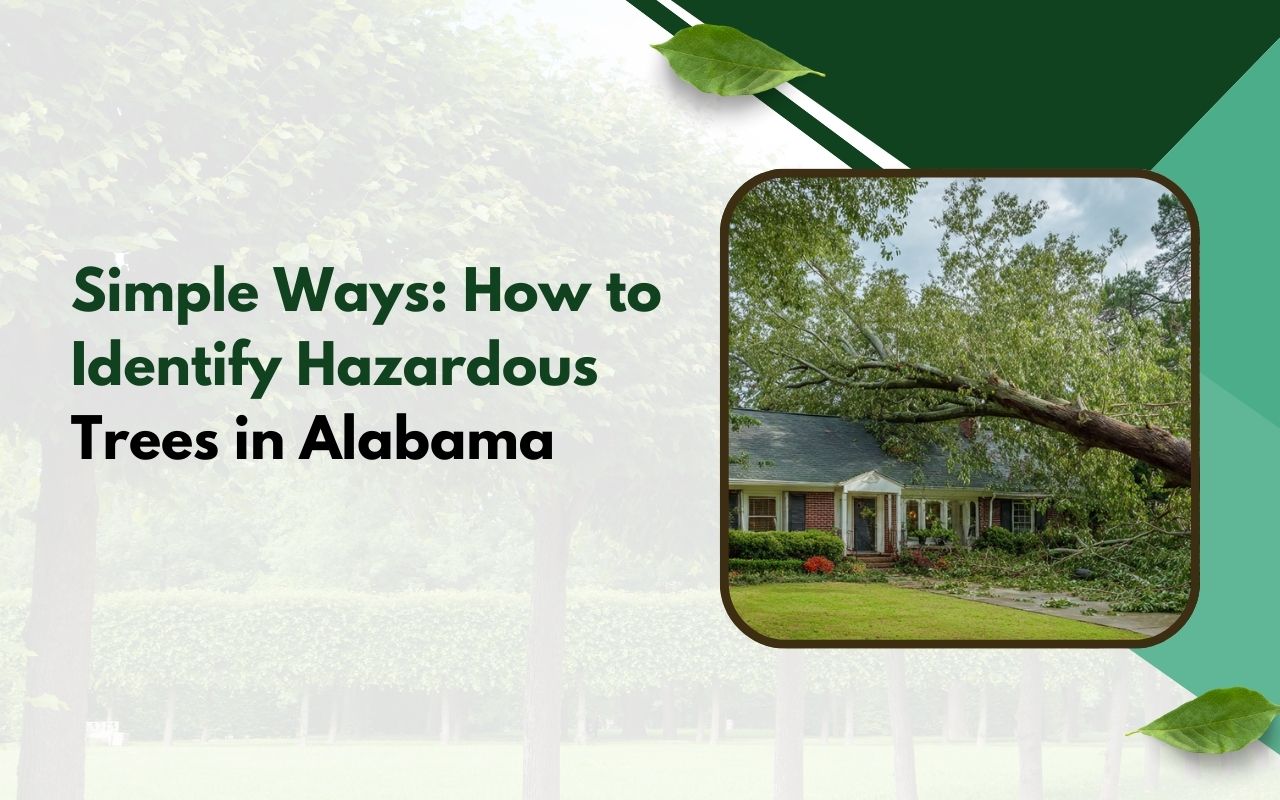
How to Identify Hazardous Trees in Alabama starts with a quick look in your yard. Alabama trees bring shade and beauty. However, some hide serious risks. If you notice a worrying lean or twisting cracks, act early. Therefore, learn the warning signs before storms.
In addition, signs like root rot, lean angle, cracks, and fungus conks are clear clues. This guide explains simple checks you can do today. As a result, you can protect your property and help keep neighbors safe.
Common Signs of Tree Hazards in Alabama
How to Identify Hazardous Trees in Alabama is easier when you know what to scan for. Many problems show up before heavy rain or winter wind. Moreover, a fast visual check can reveal risk in minutes.
- A noticeable lean angle, especially if it keeps increasing.
- Large cracks, deep splits, or missing bark that exposes weak wood.
- Root rot signs, such as soft roots or soil that stays soggy.
- Fungus conks or mushrooms near the base or on the trunk.
- Dead, hanging, or broken limbs that could drop without warning.
Furthermore, multiple signs at once often mean the tree is unstable. For example, a lean plus fungus conks can point to internal decay. Therefore, check trees each season and after major storms.
Importance of Identifying Hazardous Trees
How to Identify Hazardous Trees in Alabama helps prevent injuries and expensive damage. Falling limbs can hit roofs, cars, and play areas. Consequently, early spotting reduces emergencies and stress.
Meanwhile, early action also supports local tree health. Removing or treating a failing tree can limit disease spread. Moreover, healthy trees improve air quality and support wildlife. Therefore, safety and conservation can work together.
Assessing Lean Angles in Trees
A slight tilt can be normal. However, a sudden or growing lean is a red flag. Compare the trunk to a straight object, like a fence post. If it looks more than about 10 degrees off upright, take note. Also, a lean toward homes or roads raises urgency.
Moreover, track changes over time with photos. If the lean worsens, the root system may be failing. Therefore, schedule a professional evaluation before the next storm front arrives.
Understanding Root Rot and Its Impact
Root rot often starts when soil stays wet for long periods. As a result, fungi break down root tissue and weaken anchoring. Look for roots that are brown, soft, or hollow. In addition, mushrooms or fungus conks near the base can signal deep decay.
However, severe root rot can cause failure even in moderate winds. Improving drainage may help in mild cases. Still, advanced decay often needs removal to avoid sudden collapse.
Recognizing Cracks in Tree Trunks
Cracks range from small bark splits to deep structural openings. Small surface lines may be harmless. However, long vertical cracks, wide gaps, or exposed soft wood are serious. Wind and temperature shifts can widen damage over time.
Moreover, gently probing can reveal pulpy wood, which suggests internal decay. If major cracks appear with other warning signs, get expert help quickly.
Identifying Fungus Conks on Trees
Fungus conks are shelf-like growths on trunks or near roots. They often indicate advanced internal decay. Therefore, treat conks as a strong warning sign, even if the tree still looks green.
In addition, note the size and number of conks. Multiple or large conks often mean weakened wood inside. Consequently, a professional assessment can confirm whether treatment or removal is needed.
Steps to Take Upon Identifying a Hazardous Tree
How to Identify Hazardous Trees in Alabama is only useful if you act right away. First, reduce the risk to people and property. Then, document what you see and involve qualified help.
- Clear the area under the canopy and limit access immediately.
- Take photos of the lean, base, trunk cracks, and any fungus growth.
- Write down dates and changes you notice after storms.
- Request an on-site risk check from Cabrera Professional Tree Service.
Moreover, if removal is the safest option, review your next steps for tree removal in Decatur, AL. For a direct request, share your photos through the contact page.
Professional Tree Risk Assessment Services
Certified arborists use tools to measure lean and check decay. Therefore, a professional report can guide pruning, bracing, or removal. This is especially helpful after floods or severe wind events.
Moreover, routine maintenance can lower risk before the next season. If your trees need shaping or clearance, explore tree trimming in Scottsboro, AL with Cabrera Professional Tree Service.
Local Regulations and Resources for Dealing with Hazardous Trees
Rules can vary by county or city, especially on public land. Therefore, check local offices before removing protected trees. In addition, permits may be required in some areas.
- Contact your city or county planning office for permit guidance.
- Ask local forestry or extension programs about low-cost advice.
- Look for community workshops on safe pruning and tree care.
Moreover, using local resources helps you follow best practices. Consequently, you reduce liability while supporting greener neighborhoods.
Frequently Asked Questions
What is the fastest way to spot a risky tree?
Start with the base and trunk. Then check for lean, cracks, dead limbs, and fungal growth. Moreover, compare photos over time.
How much lean is too much?
A small lean can be normal. However, a sudden lean or one that looks over about 10 degrees deserves attention.
Do fungus conks always mean the tree will fall?
Not always. Still, conks often signal internal decay. Therefore, an arborist should assess the tree’s strength and risk.
Can I treat root problems myself?
You can improve drainage and avoid overwatering. However, advanced decay is dangerous. Consequently, professional evaluation is safer.
When should I call a professional right away?
Call if you see multiple warning signs, or if the tree threatens a home, road, or play area. Moreover, act quickly after storms.
Prioritizing Safety and Environmental Conservation
How to Identify Hazardous Trees in Alabama helps protect families, neighbors, and the green spaces you value. By watching for root rot, lean angle changes, trunk cracks, and fungus conks, you can respond early. Therefore, timely action preserves healthy trees and reduces storm-related damage. For tailored support, Cabrera Professional Tree Service can guide safe, responsible care.