
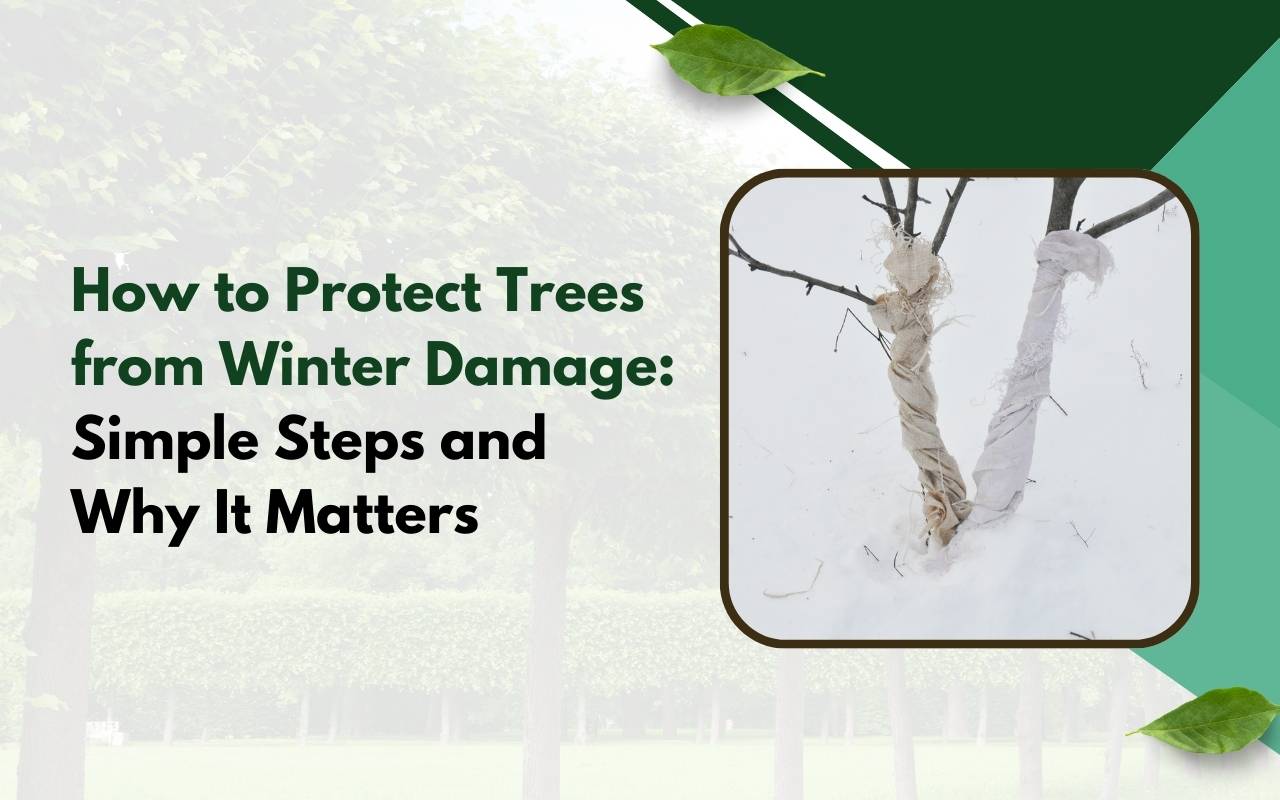
How to Protect Trees from Winter Damage is essential if you want your landscape to stay healthy through freezing temperatures. Winter brings wind, ice, and sudden cold snaps that can stress even strong trees.
In this guide, you will learn clear, practical ways to shield your trees from harsh weather. You will also see how planning, monitoring, and adjusting your winter care plan keeps your trees safer every year.
Understanding winter damage in trees
Cold weather harms trees in many small ways that add up over the season. Sudden temperature changes can crack bark, dry winds can pull moisture from needles, and heavy snow can break branches.
In addition, young trees, shallow-rooted species, and newly planted trees face the highest risk. With regular tree maintenance, you can spot weak points early and prepare them before winter arrives.
- Frost cracks along the trunk from rapid temperature swings.
- Sunscald on smooth bark during bright winter days.
- Brown, dry needles or leaves from winter burn.
- Broken branches from heavy snow and ice buildup.
- Root damage in soil that freezes and thaws often.
How to Protect Trees from Winter Damage Step by Step
Good winter tree care starts long before the first hard freeze. However, even simple actions done at the right time can greatly lower the risk of damage.
Prepare your trees before the first freeze
Begin by removing weak, dead, or crossing branches. Well-timed pruning reduces the chance that snow or ice will snap them. For safer and cleaner cuts, consider professional tree pruning services in late fall.
- Inspect trunks, branches, and roots for cracks, decay, or pests.
- Water deeply during dry fall weeks so roots store enough moisture.
- Add a wide ring of mulch to insulate roots and stabilize soil.
- Wrap young or thin-barked trunks with breathable tree wrap.
- Stake newly planted trees to prevent wind from loosening roots.
Protect trunks, roots, and branches
After you prepare your trees, focus on key stress points. Gently brush heavy snow off branches with an upward motion rather than shaking them. Keep mulch a few inches away from the trunk to avoid rot yet still protect roots.
Additionally, consider simple windbreaks for exposed trees, such as burlap screens. These barriers reduce harsh winds that dry out needles and buds during very cold spells.
Common winter tree care mistakes to avoid
Many homeowners search for How to Protect Trees from Winter Damage but still make simple errors that undo their hard work. Avoiding these mistakes helps your trees stay stronger with less effort.
- Piling mulch directly against the trunk, which can invite rot and insects.
- Using tight plastic wrap that traps moisture and damages bark.
- Breaking ice off branches, which often snaps the wood underneath.
- Pruning heavily right before a deep freeze without a clear plan.
- Ignoring young or newly planted trees that need extra care.
Checking if your winter tree protection is working
As winter moves forward, it is wise to check how your trees respond. Regular checks help you adjust your approach and prevent small issues from becoming major damage.
- Look for new cracks in bark or peeling sections on sunny sides of trunks.
- Check buds; they should look full, firm, and not dry or shriveled.
- Watch for leaning trees or loosened soil around roots after strong winds.
- Note any branches that sag more each storm and consider pruning them later.
Benefits of good winter tree protection
A smart approach to How to Protect Trees from Winter Damage saves money on removals and replacements over time. Moreover, it protects the character and shade your mature trees already provide.
- Fewer broken branches and emergency cleanups after storms.
- Healthier growth in spring, since trees keep more stored energy.
- Stronger structure that stands up better to future winters.
- Improved safety around driveways, sidewalks, and play areas.
Frequently Asked Questions
What is the best time to start How to Protect Trees from Winter Damage?
Ideally, you should begin planning in late summer and early fall. During this time, you can schedule pruning, refresh mulch, and correct soil issues before the first hard freeze reaches your area.
Do all trees need wrapping in winter?
No, not every tree needs wrapping. However, young trees, thin-barked species, and trees exposed to strong winter sun or wind often benefit from breathable wraps around the trunk.
How much mulch should I use around my trees in winter?
Use a mulch layer about two to four inches deep. Spread it in a wide ring under the canopy, but keep a small gap around the trunk so moisture does not sit directly against the bark.
Can I prune my trees during winter?
Yes, many trees can be pruned safely in late winter when they are dormant. Even so, it is important to follow proper pruning techniques or hire a certified arborist to avoid long-term damage.
When should I call a professional for winter tree care?
You should contact a professional if you see large dead limbs, leaning trees, or damage near your home or power lines. A trained crew can create a safe winter care plan tailored to your trees and property.
Get professional help to protect your trees this winter
Even with careful planning, some trees need expert attention. For a custom winter protection plan, reach out through the Cabrera Professional Tree Service contact page. Their team can combine pruning, support systems, and ongoing tree maintenance so your landscape is ready for every cold season.