
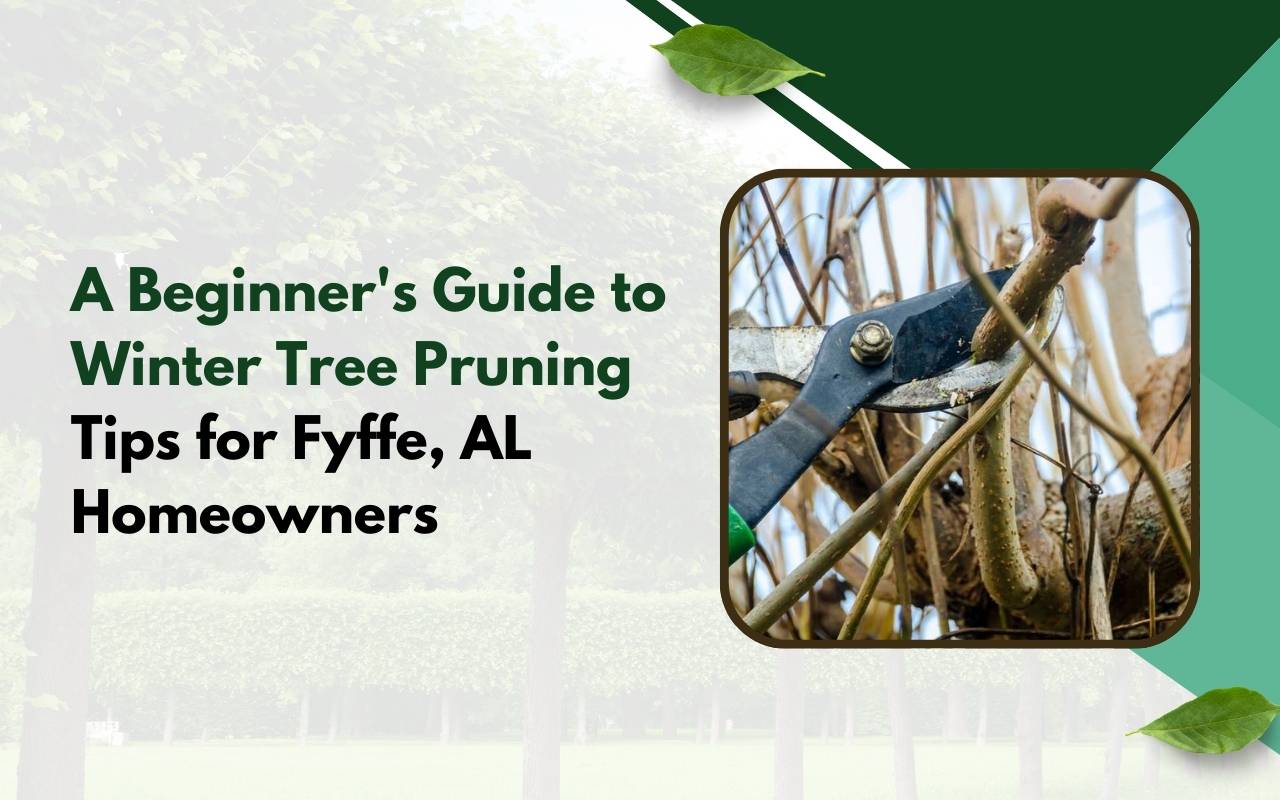
Winter Tree Pruning Tips for Fyffe, AL Homeowners help you keep trees safe, healthy, and beautiful during the cold months. This beginner-friendly guide explains when to prune, which branches to remove, and when to call a professional so your yard looks tidy and your trees are ready for a strong spring.
Tools and Safety Basics for Winter Pruning
Before you make any cuts, it is important to gather the right tools and stay safe. Winter pruning often means working around ice, uneven ground, and sometimes power lines, so you should take extra care.
- Hand pruners for small twigs and young branches.
- Loppers for slightly thicker branches within easy reach.
- Pruning saw for larger limbs that need clean cuts.
- Gloves, safety glasses, and a hard hat when working under branches.
- Sturdy boots with good grip for wet or frozen soil.
However, if a branch is close to wires, on a steep slope, or very large, you should not attempt it yourself. In those cases, contact a certified tree professional to prevent injuries and property damage.
Why Winter Pruning Matters in Fyffe, AL
In Fyffe, AL, many trees go dormant during winter, which makes this season ideal for careful pruning. With leaves gone, you can clearly see the tree’s structure, spot dead or crossing branches, and plan clean cuts that guide healthy growth.
Additionally, many diseases and pests are less active in colder weather. This often lowers the risk of infections entering through fresh cuts and helps trees recover better once spring arrives.
When Is the Best Time to Prune Trees in Winter?
Generally, late winter is a great time to prune most shade trees. Temperatures are cool, but the worst of the deep freeze has often passed, and spring growth has not yet begun.
However, not every tree is the same. Flowering trees that bloom early may do better when pruned just after they flower. Therefore, when you are not sure, it is wise to ask a tree expert about the best timing for your specific species.
Key Winter Tree Pruning Tips for Fyffe, AL Homeowners
These Winter Tree Pruning Tips for Fyffe, AL Homeowners focus on safety, timing, and the long-term health of your trees. By following a simple process, you can help your trees grow stronger instead of stressing them.
- Start by removing dead, broken, or diseased branches first.
- Cut branches that rub or cross to reduce wounds and breakage.
- Thin crowded areas so light and air can move through the canopy.
- Keep a natural shape and avoid cutting too much from the top.
- Never remove more than about one quarter of the living canopy in a single season.
How to Make the Right Cuts Step by Step
First, locate the branch collar, which is the slightly swollen area where a branch meets the trunk or a larger limb. You should make your final cut just outside this collar, not flush with the trunk.
- For small branches, use sharp hand pruners to make one smooth cut.
- For larger limbs, use the three-cut method to prevent tearing.
- Never leave long stubs, since they do not heal well and may invite decay.
Tools and Resources to Make Pruning Easier
You do not need professional-grade equipment to care for small trees and shrubs. However, the tools should be sharp, clean, and in good working order so that each cut is smooth and fast.
- Disinfect blades between trees to reduce the spread of disease.
- Use a stable ladder rated for outdoor work if you must reach higher points.
- Consider a pole pruner for mid-height branches instead of climbing.
Additionally, you can rely on local professionals for taller or more complex trees. For example, professional tree trimming in Fyffe, AL can handle delicate or risky cuts safely and efficiently.
Winter Tree Pruning vs. Waiting Until Spring
Many homeowners wonder if they should prune in winter or wait until spring. Winter pruning has clear advantages, yet there are times when a different season is more suitable.
- Winter pruning often means less stress for many dormant trees.
- It is easier to see structural issues without leaves.
- Spring pruning may suit plants that bloom on old wood.
- Summer pruning can slow overly vigorous growth in some species.
Therefore, think about your goals. If safety and structure are your main concerns, winter is usually a smart choice. If you want more flowers on certain ornamentals, you may time pruning just after blooming instead.
Common Winter Pruning Mistakes to Avoid
Even with good intentions, it is easy to make pruning errors that harm trees. Knowing the most common mistakes helps you avoid long-term damage and expensive repairs.
- Topping trees by cutting straight across the top.
- Removing too much live wood in one season.
- Leaving long stubs that never heal well.
- Using dull tools that crush or tear the bark.
- Pruning near power lines or roofs without training.
If you notice a past mistake, do not panic. Instead, focus on gentle, corrective pruning over several seasons, or ask a professional arborist for a recovery plan.
When to Call a Professional Tree Service in Fyffe, AL
Some pruning tasks are simply not safe for homeowners. Very large branches, decayed trunks, and limbs near wires or structures should be handled by trained crews with proper equipment.
If you feel unsure about applying these Winter Tree Pruning Tips for Fyffe, AL Homeowners on tall or damaged trees, it is better to hire an expert. Local teams offering expert tree pruning services can shape your trees correctly and spot hidden problems.
In more serious cases, such as severely leaning trees, cracked trunks, or major storm damage, you may need removal instead of simple pruning. Professional crews that provide tree removal in Fyffe, AL can safely take down risky trees and protect your home.
After removal, exposed stumps can create tripping hazards and invite pests. Therefore, consider safe stump grinding to clear the area and prepare the space for new planting or landscaping.
Whenever you are unsure what your trees need, you can request a winter pruning inspection and get tailored advice for your yard.
Frequently Asked Questions
1. Is winter really the best time to prune trees in Fyffe, AL?
For many shade trees, late winter is a very good time to prune. Trees are dormant, pests are less active, and you can see the structure clearly. However, some flowering trees may need pruning just after they bloom, so checking the species is always important.
2. Which branches should I remove first during winter pruning?
Always start with branches that are dead, broken, diseased, or rubbing against other limbs. Next, thin crowded areas and remove weak branches with narrow angles. This approach improves safety and health while keeping the tree’s natural shape.
3. Can winter pruning hurt my trees?
When done correctly, winter pruning usually helps trees instead of hurting them. Problems arise when too much live wood is removed, cuts are made in the wrong place, or large limbs are cut without proper technique. Careful planning and clean cuts reduce these risks.
4. Should I seal pruning cuts made in winter?
In most cases, modern tree care does not recommend sealing cuts with paint or wound dressings. Trees naturally form their own protective barrier over time. Clean, proper cuts made just outside the branch collar generally heal better without artificial sealants.
5. When do I need a professional instead of doing it myself?
You should call a professional if branches are large, near power lines, over roofs, or if the tree shows signs of decay or serious leaning. Also, if you feel uncomfortable working on ladders, it is safer to let trained crews handle the work.
Preparing Your Trees for a Healthy Spring
By following Winter Tree Pruning Tips for Fyffe, AL Homeowners now, you set your trees up for safer growth all year. Winter is a great time to remove risky branches, guide healthy structure, and prevent future problems.
With the right tools, safe habits, and help from trusted local professionals when needed, your trees can stay strong, attractive, and ready to thrive when warmer weather returns.